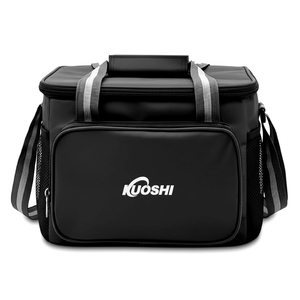
Tokyo train networks (such as JR East Yamanote Line and Tokyo Metro) strictly govern rush-hour space etiquette (Mae-kake: wearing rucksacks on one’s chest). Backpacks engineered for Tokyo must feature self-standing flat bases, low-profile depth under 17cm, and snag-free side contours to prevent accidental friction against crowded train cabin passengers.
Tokyo corporate culture in Marunouchi, Otemachi, and Toranomon demands travel backpacks that transform instantly. Tuck-away ergonomic shoulder harnesses, reinforced vertical and horizontal leather luggage-grade handles, and hidden trolley sleeves allow rapid conversion from an agile rucksack to an executive briefcase suitable for conservative boardrooms.
Japan's intense rainy season (Tsuyu) and sudden urban torrential storms (Guerrilla Gou) necessitate hyper-durable DWR-coated shells. Tokyo buyers specify JIS L 1092 hydrostatic pressure ratings exceeding 10,000mm, reverse-coil waterproof zippers (YKK AquaGuard equivalent), and moisture-diverting gutter seams over laptop chambers.
Engineered for Friday afternoon Tokaido Shinkansen transit from Shinagawa to Kyoto or Kanazawa. Includes butterfly-opening 180° clamshell organization, isolated garment compression zones, and TSA-compliant quick-extract laptop cradles.
International business jet-setters require strict IATA carry-on calibration (max 55x40x20cm). Hidden passport RFID blocker pockets, quick-access Suica/Pasmo transit card pouches on the harness straps, and reinforced sunglass vaults.
Designed for digital nomads shuttling between WeWork Shibuya and Daikanyama cafes. Modular internal organizers for magnetic MagSafe battery bricks, mechanical keyboards, multi-port GaN chargers, and high-density impact-resistant padding.
The crossover 'Urban-Outdoor' (Gorpcore) demographic. Ultra-lightweight Cordura Ripstop fabrications with dual water bottle expandable side gussets, sternum stabilizers, and breathable air-mesh channel backs for day-hiking ease.
| Material Category | Technical Denier / GSM | Japanese Testing Benchmark (JIS) | Ideal Tokyo Market Application |
|---|---|---|---|
| Recycled Cordura® Nylon (GRS) | 500D – 1000D Ballistic | JIS L 1096 (Tear Resistance > 180N) | High-end corporate travel backpacks & flagship urban luggage collections |
| Japanese-Grade RPET Oxford | 600D / 900D with TPU Film | JIS L 1092 (Hydrostatic Pressure > 12,000mm) | Weatherproof commuter rucksacks, sustainable Tokyo startup merchandise |
| Full-Grain Vegetable Tanned Leather | 1.4mm – 1.8mm Grade A | JIS K 6550 (Rubbing Colorfastness Level 4+) | Ginza-grade luxury messenger/shoulder backpacks, executive brief-packs |
| Organic Cotton Canvas (GOTS) | 12oz – 18oz Heavy Slub | JIS L 0844 (Washing Durability Class 4) | Minimalist lifestyle weekender bags, Tokyo craft boutique eco-series |
| Ultralight Diamond Ripstop | 70D – 210D High Tenacity | JIS L 1096 (Tensile Strength > 350N) | Packable secondary travel bags, ultra-compact daypacks for Shinkansen racks |
Require specific Japanese Industrial Standards (JIS) or OEKO-TEX Standard 100 chemical-free lab test documentation for customs entry?
Working straight with our integrated workshop eliminates 25% to 40% intermediary markups. This margin headroom allows Tokyo retailers to invest in higher-spec exterior fabrics (Cordura, X-Pac, heavy canvas) while preserving handsome gross retail margins.
Our dedicated sample room turns 2D sketches, Japanese tech packs, or competitor benchmarks into physical pre-production prototypes within 5 to 7 working days. Every seam allowance, stress-point bar-tack, and internal divider is confirmed before bulk cutter tooling.
Tokyo prime department stores (Isetan Mitsukoshi, Takashimaya) and corporate tenders demand rigorous environmental credentials. We issue third-party verified transaction certificates (TC) for OEKO-TEX Standard 100, Global Recycled Standard (GRS), and GOTS organic cotton.
From magnetic German FIDLOCK quick-release buckles to authentic YKK Japan anti-puncture RC zippers, custom matte-black zinc alloy pulls, and laser-etched aluminum brand plaques, we deliver luxury tactility that satisfies Japan's discerning touch.
Fast inventory replenishment protects your sales momentum. While conventional suppliers impose 60–90 day lead windows, our lean batch assembly architecture maintains standard batch cycle times of 15 to 25 days following golden sample sign-off.
We provide complete Japanese Household Goods Quality Labeling Act compliant tagging, wash-care woven labels, bilingual SKU barcode hangtags, individual anti-mold silica packs, and master shipping cartons reinforced for automated Japanese logistics hubs.
Our standard production MOQ starts at 300 to 500 units per silhouette for fully customized OEM projects utilizing in-stock technical fabrics (e.g., standard black/navy/charcoal Cordura or high-density Oxford). For bespoke Pantone-dyed fabrics or custom-tooled metal hardware, our threshold is typically 1,000 units. For pilot market trials or testing Tokyo pop-up concepts, we offer flexible hybrid runs where we split order quantities across multiple colorways.
Japanese import standards are the strictest in the world. We operate under stringent AQL 1.0 (Critical / Major) and AQL 2.5 (Minor) inspection thresholds. Crucially for the Japanese retail market, 100% of finished sewn goods pass through dual-sensor automated metal needle detectors (Hashima / Oshima calibrated to 0.8mm ferrous sensitivity) prior to polybag carton packing, completely eliminating residual broken needle fragments. Inspection certification logs are included with each export docket.
Yes. We have established supply agreements with YKK global divisions, allowing us to build genuine YKK AquaGuard, RC, and Excella zipper teeth assemblies into our packs. We also engineer magnetic FIDLOCK hardware, Duraflex buckles, and custom-molded EVA back panels. For labeling, we produce Japanese Household Goods Quality Labeling Act compliant interior tags, Japanese-language wash instruction ribbons, and custom hot-stamped leather emblems.
Pre-production prototype development requires approximately 5 to 7 business days once your 3D CAD design, tech pack, or reference sample is approved. Once the golden counter-sample is physically signed off in Tokyo, mass batch manufacturing takes 15 to 25 calendar days depending on batch volume. Air shipping to Haneda (HND) or Narita (NRT) requires 3 to 5 transit days; ocean freight to Port of Tokyo or Port of Yokohama takes approximately 12 to 18 transit days.
Yes. We provide complete commercial invoices, packing lists, and preferential Certificates of Origin (under applicable bilateral trade agreements or WTO tariff schedules) to ensure smooth customs clearance at Tokyo Customs (Tokyo Zeikan). Our technical fabrics are tested for formaldehydes, banned azo dyes, and heavy metals in full accordance with Japan’s Law for the Control of Household Goods Containing Harmful Substances.
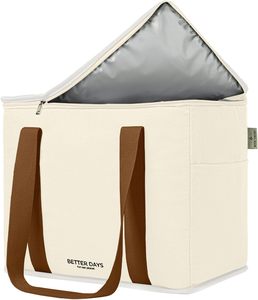
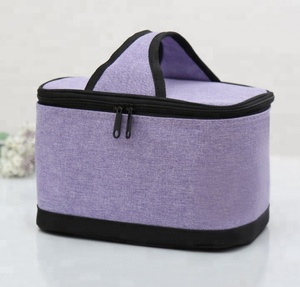
Absolutely. As shown in our featured catalog, our technical facilities manufacture hybrid designs: modular leakproof thermal insulated food/beverage chambers (ideal for Tokyo day hikers or food commuters), suspended fleece-lined 16" MacBook Pro cradles with EVA perimeter armor, detachable tech pouches, and hidden pass-through grommets for high-speed charging batteries.
We respect intellectual property protection for all Japanese brand partners. We routinely execute bilateral Non-Disclosure Agreements (NDA) before reviewing tech packs or creative briefs. Your proprietary patterns, 3D tooling molds, logo dies, and CAD drawings remain exclusively yours and are never recycled, publicly displayed, or shared with third-party competitors.
Direct Factory Partnership · Comprehensive OEM / ODM Customization · Japanese Needle Detection Passed · Guaranteed Lead Times · Transparent Factory Pricing