
Explore precision-machined pop-up mechanisms, RFID-lined leather goods, and high-tensile bags tested against skimmer-grade electromagnetic frequencies.
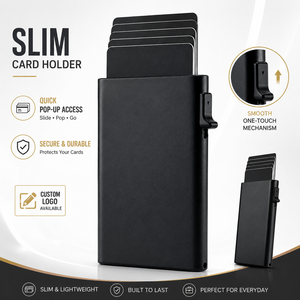
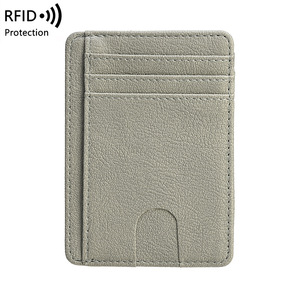
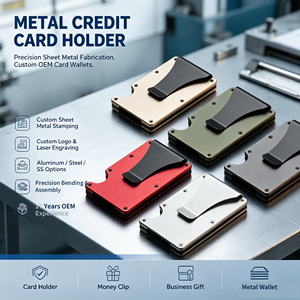

A rigorous industrial perspective examining production hubs, Faraday-cage barrier composites, and quality-control protocols across global supply chains.
Strategically positioned in Istanbul, Turkish facilities provide European and North American retail brands with reduced transit intervals (3–5 day road freight into Central Europe). Utilizing proprietary copper-nickel alloy web matrixes embedded in genuine Italian-finish leathers and 6061-T6 aviation-grade aluminum housings, this hub bridges high fashion with strict shielding compliance.
Unmatched in sheer mechanical output for pop-up aluminum ejector boxes. These factories leverage high-cavity zinc-aluminum die-casting and CNC tooling. While volume cost structures are competitive, international buyers must navigate supply chain choke points, extended maritime container lead times, and evolving trade tariffs.
World-renowned for luxury grade vegetable-tanned hides. Modern Italian leather houses integrate flexible conductive carbon-polymer liners beneath aniline leathers. However, MOQs remain high, unit costs exceed mid-tier private label budgets, and development lead cycles frequently surpass 90 business days.
Rapidly expanding manufacturers offering integrated soft-goods production with ballistic nylon, Cordura, and welded TPU laminations. Ideal for tactical outdoor wallets and travel pouches, but reliant on imported raw shielding fabrics, occasionally introducing batch-to-batch attenuation variances.
Large-scale capacity for conventional bifold and trifold designs, pairing competitive labour costs with domestic leather tanneries. Buyers must actively verify that RFID foil interlinings adhere strictly to REACH/RoHS compliance to prevent heavy metal leaching.
From high-security German biometric smart-card enclosures and Taiwanese micro-machined spring ejectors, to Polish and Portuguese boutique workshops, these niche players serve specialized market segments requiring ultra-low volume prototypes or defense-standard EMP hardening.
A comparative overview of electromagnetic barrier substrates deployed within modern security-centric small leather goods (SLG).
| Shielding Substrate | Attenuation Efficacy | Resonance Frequencies Blocked | Mechanical Flexibility | Primary Industrial Use Case |
|---|---|---|---|---|
| Nickel-Copper Plated Polyester Fabric | 70 dB – 85 dB | 10 MHz – 3 GHz (13.56 MHz Standard) | Exceptional (Tensile & Pliable) | Internal lining for slim leather bifolds, cardholders, and luxury wallets. |
| 6061-T6 Anodized Structural Aluminum | > 90 dB (Solid Attenuation) | 100 kHz – 10 GHz (Broad Spectrum) | Rigid (Deformation Resistant) | Tactical pop-up ejector card carousels and anti-crush modular frames. |
| Conductive Carbon Fiber (3K/Forged) | 35 dB – 55 dB | 13.56 MHz – 915 MHz | Ultra-Stiff / Low Density | High-end minimalist outer plate designs; combined with alloy core. |
| Vapor-Deposited Aluminum (VMPET) Film | 20 dB – 35 dB | Marginal at 13.56 MHz (Angle dependent) | High (Susceptible to creasing tears) | Low-cost promotional paper/disposable sleeve envelopes. |
Strategic analysis for enterprise procurement officers balancing physical data theft mitigation, biometric ergonomics, and environmental legislation.
Enterprise users increasingly reject complete signal blackout. The next generation of wallets integrates zoned isolation: a front-facing non-shielded pass-through pocket for contactless public transit tap-and-go (NFC 13.56 MHz), isolated from an interior Faraday envelope protecting high-balance EMV payment cards and passport RFID transponders.
Procurement demands have shifted from standalone card sleeves to precision CNC-cavity housings designed specifically to seat Apple AirTag or ultra-slim rechargeable Bluetooth trackers without degrading signal transmission range or interfering with internal card shielding layers.
With the European Union's Ecodesign for Sustainable Products Regulation (ESPR), brand owners require certified recycled base materials. Factories are shifting toward GRS-certified post-consumer RPET woven with recyclable conductive micro-wires, paired with water-based solvent-free PU or GOTS-certified organic cotton canvas linings.
Operating from our integrated manufacturing compound in Istanbul, Türkiye, we combine direct European trade connectivity with master-grade technical tooling.
We are a direct manufacturer—not an intermediary trading broker. Cutting, stitching, laser branding, spring-mechanism calibration, and custom box packaging occur entirely in-house. Buyers interface directly with our engineering and tooling leads, cutting project friction, speeding sample revisions, and securing transparent factory-gate costings.
Our streamlined sampling and pre-production processes mean prototypes are dispatched within 5 to 7 days, and bulk orders complete within a 15–25 day production window post-approval. Coupled with our Eurasian transport hub, shipments reach Western Europe via road freight in days without ocean delays.
From OEKO-TEX Standard 100, GOTS organic cotton traceability, and GRS-verified recyclability to precision screen printing, debossing, hot stamping, and CNC metal anodization—our production systems maintain thorough compliance documentation for rapid import clearance in North America and the EU.
Essential guidance for inventory directors, sourcing agents, and technical product managers.
Our standard Faraday shielding composites are designed and tested to attenuate the high-frequency 13.56 MHz spectrum, which is universally utilized by ISO/IEC 14443 and ISO/IEC 15693 protocols (covering Visa payWave, Mastercard PayPass, contactless debit cards, and national e-Passports). Standard linings intentionally do not block low-frequency 125 kHz access tokens unless specified with an optional magnetic-attenuation permalloy foil.
Traditional aluminum foil inserts degrade rapidly through standard wallet creasing. At VYGR Bags, we exclusively deploy woven conductive polyester webs electroplated with nickel-copper particles. These flexible textile interlinings undergo ASTM flex-endurance testing of over 50,000 bending cycles without loss of electrical continuity or shielding attenuation.
Because we maintain our own machinery in Istanbul, we offer low barrier pilot runs. For standard leather, canvas, and PU wallet variants with custom debossing or screen printing, our baseline MOQ begins at 300 to 500 units. For fully customized custom-tooled metal cardholders with custom anodization finishes, baseline tooling starts at 500 units.
Every project starts with a pre-production sample matching your exact tech pack, branding, and colorway. Bulk cutting commences only after physical sign-off. We provide continuous inline inspection reports, lab verification of electromagnetic attenuation with handheld RFID testing probes, and pre-dispatch AQL 2.5 finished-goods reports.
Our factory exports worldwide, with regular routes to North America and Western Europe. Our in-house logistics team produces ATR certificates (for duty-free or preferential EU tariffs), Bills of Lading, Commercial Invoices, Packing Lists, and Declarations of Conformity, offering flexible terms including FOB, CIF, or DDP direct to your 3PL warehouse.
Request our comprehensive technical spec sheets, raw fabric swatch guides, and instant wholesale pricing models. Connect directly with our engineering workshop in Istanbul.