
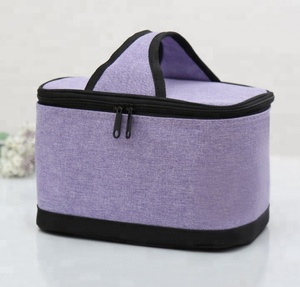
Engineered OEM Bags & Private Label Handbag Collections
From technical insulated carry solutions and American retro canvas totes to functional weekender duffels and dust protection systems, inspect our core manufacturing deliverables.
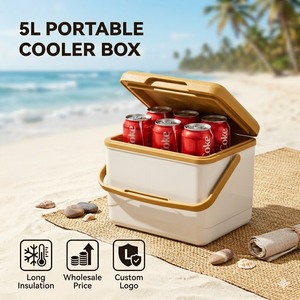
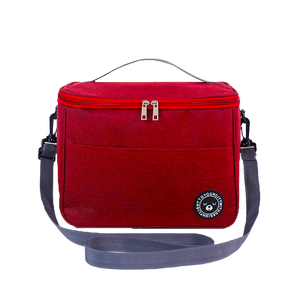
100%
Direct Factory Controlled
15–25
Days Standard Bulk Turnaround
24 Hrs
Rapid Technical Quotation
GOTS & GRS
Compliance Ready Documentation
Factory Competency
Why Direct Sourcing from Our Manufacturing Facility Redefines ROI
In modern handbag manufacturing, working directly with the industrial sewing and pattern development floor eliminates intermediary markups, compresses production iteration cycles, and guarantees certified material provenance.
Navigating the global supply chain for custom handbags, leather goods, and specialized textile carriers requires more than transactional assembly; it demands an engineering partner with vertically integrated capabilities. As a dedicated OEM and private-label manufacturer based in our industrial facility in Istanbul, Türkiye, we maintain absolute ownership over every phase of production. Unlike trading companies that subcontract production across disparate, unverified workshops, our in-house pattern-makers, precision cutting bays, screen/digital printing departments, and export documentation teams work synchronously under one roof.
By engaging directly with our manufacturing floor, sourcing directors, fashion brand founders, and corporate procurement executives eliminate 15% to 28% of intermediary agency overhead while gaining transparent, mill-level visibility into fabric densities (GSM), structural hardware metallurgical composition, edge-paint longevity, and toxicological safety certifications.
Direct Industrial Source
Zero trading layers. Your technical tech packs are reviewed directly by senior master sample-makers, ensuring instant design feasibility and rock-solid unit pricing.
Strategic Near-Shoring
Positioned in Istanbul, our factory provides rapid highway and sea transit directly into the EU and swift multimodal air/sea corridors to North America, mitigating maritime disruption.
Certified Global Compliance
Seamless compliance clearance with verifiable documentation for OEKO-TEX Standard 100, Global Organic Textile Standard (GOTS), and Global Recycled Standard (GRS).
Technical Whitepaper
Textile, Polymeric & Leather Engineering Standards
A rigorous breakdown of substrate selections, tensile criteria, thermal lining matrices, and environmental standards optimized for contract bag manufacturing.
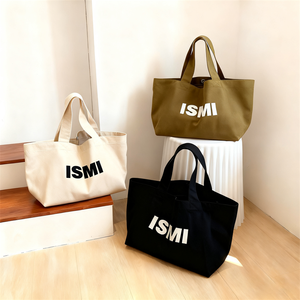
Evaluating material mechanics is the foundation of quality assurance in OEM handbag manufacturing. A handbag or commercial carrier succeeds or fails based on substrate weight, tensile burst threshold, stitching shear capacity, and lining resilience. For retail lifestyle brands, heavy cotton canvas ranging from 12oz to 16oz (340 to 450+ GSM) offers the tactile weight, drape, and heirloom longevity expected in luxury boutiques. When reinforced with Box-X perimeter stitching, these totes sustain working tensile loads exceeding 25 kilograms.
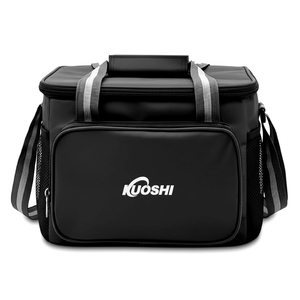
In contrast, technical thermal carriers and functional duffels utilize high-density 600D to 1680D Oxford polyesters backed with waterproof thermoplastic polyurethane (TPU) or PVC laminate barriers. Thermal insulation efficacy depends strictly on closed-cell Expanded Polyethylene (EPE) foam core thickness (3mm to 8mm), paired with heat-sealed PEVA or reflective aluminum composite food-contact linings that eliminate thermal bridges.
| Material Class | Weight / Caliper Range | Recommended OEM Applications | Key Performance Metrics |
|---|---|---|---|
| Organic & Combed Cotton | 140 GSM – 400 GSM | Retail shopping totes, private label dust covers, fashion shoulder bags | GOTS certified, high dye affinity, breathable fiber matrix |
| Heavy American Canvas | 12oz – 18oz (340–510 GSM) | Heritage work totes, weekender duffels, tool bags | High abrasion cycles, heavy tear resistance, structured upright form |
| Hydrophobic Oxford Polyester | 300D, 600D, 900D, 1680D | Sports duffels, anti-theft sling bags, outdoor cooler shells | PU/TPU hydro-block backing, weather-resistant, tear stop weave |
| Expanded Polyethylene (EPE) + PEVA | 3mm – 8mm closed cell | Thermal lunch bags, refrigerated breast milk totes, cooler boxes | High thermal delta maintenance, food-grade non-toxic, seamless heat weld |
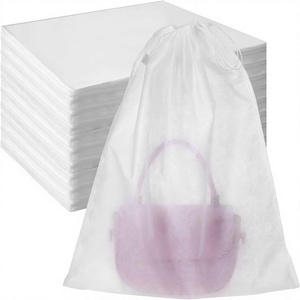
| Eco Non-Woven Polypropylene | 60 GSM – 120 GSM | High-volume promotional gift bags, protective shoe dust pouches | Low unit cost, lightweight, 100% recyclable mono-material structure |
| Microfiber PU & Semi-Aniline Leather | 0.8mm – 1.6mm thickness | Designer handbags, crossbody mini-bags, zip bifold cardholders | Scratch-resistant grain, flexibility, premium embossing definition |
Procurement Intelligence
Future Handbag Sourcing Trends: 2026–2030 Supply Horizon
Actionable macro analysis designed for supply chain managers, brand custodians, and corporate buyers planning next-generation collections.
The international handbag and soft-accessories procurement paradigm is undergoing profound structural shifts driven by regulatory governance, environmental mandates, and lean omnichannel retail demands. Brands that fail to modernize their supplier base face regulatory non-compliance, severe margin compression, and extended stockouts.
Near-Shoring & Agility
Procurement executives are shifting allocations away from high-tariff long-haul regions toward near-shore hubs like Turkey, slashing trans-ocean transit from 45 days down to 4–7 days overland into Central Europe.
Digital Product Passports
Impending EU Circular Economy legislation mandates end-to-end QR/NFC material traceability. Our factory integrates woven smart-label hardware detailing recycled fiber ratios and cradle-to-gate carbon metrics.
Flexible MoQ Tiers
Traditional rigid 5,000-piece production gates are yielding to agile pilot batch manufacturing (500–1,000 units), allowing brands to test private-label market adoption before scaling wholesale inventories.
Bio-Based Polymer Migration
Buyers are actively replacing legacy virgin PVC with solvent-free, waterborne polyurethane (PU), certified post-consumer RPET woven threads, and certified organic bio-derived plant leathers.
Design & Innovation
Emerging Design Evolutions in Handbags and Utility Gear
How technical functionalism, hybrid lifestyle demands, and discrete security architectures are shaping modern OEM product lines.
The contemporary consumer demands utilitarian hybridity. The boundary separating everyday fashion handbags, business laptop luggage, and outdoor travel carriers has dissolved. Handbag silhouettes must seamlessly accommodate corporate electronic essentials, insulated nutrition items, and physical security protection without compromising minimalist aesthetics.
Concealed Anti-Theft Architecture
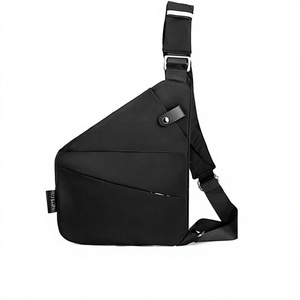
Modern crossbody slings and urban shoulder bags incorporate puncture-proof inverted reverse coil zippers, slash-resistant woven internal wire meshes, and discreet RFID-blocking pocket liners.
Compartmental Utility Ergonomics
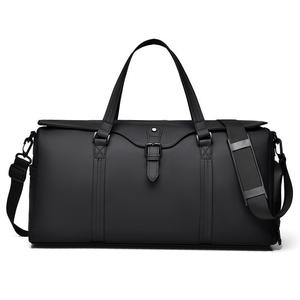
As illustrated by our specialized travel duffels, buyers expect isolated wet/dry and footwear compartments ventilated by laser-cut brass eyelets, preventing cross-contamination in transit.
Luxury Thermal Crossover
The industrial aesthetic of heavy-duty coolers has migrated into designer lifestyle totes. Consumers prioritize high-density waterproof canvas bags masquerading as fashion accessories while retaining sub-ambient cold holding performance.
Procurement Knowledgebase
Handbag Contract Manufacturing: Direct Buyer FAQ
Clear, direct, and authoritative operational answers addressing the mission-critical parameters of OEM handbag production.
Are you an authentic production factory or a third-party intermediary?
We are a direct, physical manufacturing plant headquartered in Istanbul, Türkiye. Every stage—from computerized pattern nesting, precision mechanical cutting, flatlock and post-bed sewing, to screen/sublimation printing, end-line QC inspection, and final container packaging—is handled in our owned facility.
What is the standard turnaround schedule for sample development and bulk runs?
Initial engineering prototypes and pre-production samples are completed within 5 to 7 business days following digital tech pack confirmation. Standard bulk production runs require 15 to 25 calendar days, contingent on order volume, hardware casting requirements, and specialized lab tests.
Which branding and personalized labeling capabilities do you support in-house?
We provide full-spectrum branding: high-density spot screen printing, multi-color digital transfers, all-over dye sublimation, high-stitch embroidery, blind or foil embossing, zinc-alloy custom engraved hardware plates, branded woven side-seam labels, and retail barcoded hangtag kits.
Can you manufacture strictly to international toxicological standards (REACH, Prop 65)?
Yes. We regularly supply major brands throughout the European Union and North America. All sourced synthetic fabrics, leathers, plastisols, and metal finishes can be specified to comply rigorously with EU REACH Annex XVII, California Proposition 65, and CPSIA regulations.
What minimum order volume thresholds (MoQ) do you enforce for private label runs?
While wholesale pricing benefits significantly from volume scales of 1,000 to 10,000+ units, our flexible pilot production line can support introductory brand capsule runs starting as low as 300 to 500 units per colorway for standard in-stock textile inventories.
How do you manage international logistics and export clearing paperwork?
Our dedicated internal export documentation department prepares complete customs declarations, ATR movement certificates for tariff-free EU imports, certificates of origin, and commercial invoices. We accommodate EXW, FOB, CIF, and door-to-door DDP agreements seamlessly.
Transform Your Handbag Line with an Industry-Grade OEM Factory
Bypass middlemen, secure transparent production cost baselines, and initiate your custom sampling project within 24 hours. Our technical team is ready to review your tech pack or reference concepts.
Send an Inquiry