From heavy-duty unbleached duck canvas shoppers to insulated composites, explore our production floor lines engineered for global retail chains, brand merchandising, and high-turnover distributors.
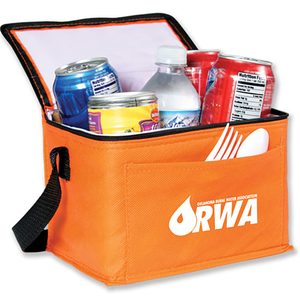
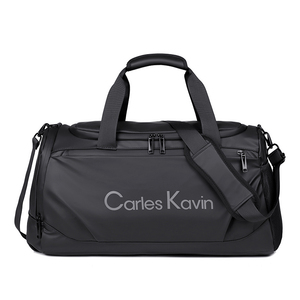

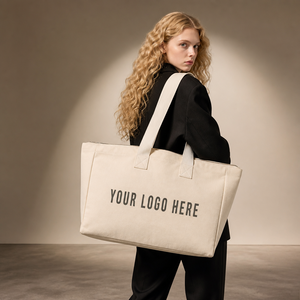
Plain canvas totes represent the foundational baseline of modern eco-packaging, corporate branding, fast-fashion retail, and functional daily carry. While superficially regarded as elementary cut-and-sew products, commercial-grade canvas tote engineering demands rigorous textile science, warp/weft tension calibration, precise yarn sizing, and systematic structural reinforcement. China remains the undisputed global capital for canvas tote manufacturing, controlling over 70% of the world's spinning, weaving, bleaching, and automated fabrication capacity.
For international procurement directors, corporate supply managers, and private-label brand founders, selecting the top tier of China plain canvas totes manufacturers requires navigating beyond middle-tier trading agencies. True production competence is determined by yarn consistency (ring-spun vs. open-end), automated CAD cutting efficiency, stitch density tolerances (Stitches Per Inch or SPI), handle shear load thresholds, and international ecological certification trails including OEKO-TEX Standard 100, Global Organic Textile Standard (GOTS), and Global Recycled Standard (GRS).
Canvas is conventionally classified by imperial weight (ounces per square yard: oz/yd²) or metric mass (grams per square meter: gsm). Understanding the structural mechanics of canvas fibers is crucial for optimizing purchase orders against cost-to-weight logistics ratios:
Compare yarn dynamics, tensile capabilities, and production engineering tolerances to calibrate your seasonal procurement technical packs.
| Fabric Classification | Weight (GSM / OZ) | Yarn Count (Warp x Weft) | Tensile Strength (ASTM D5034) | Handle Stitching Spec | Optimal Brand Application |
|---|---|---|---|---|---|
| Calico Lightweight | 120–140 gsm / 4.5 oz | 21s × 21s (Single) | ≥ 180 N | Single-needle Lockstitch | Dust Bags & Trade Events |
| Standard Sheeting | 180–220 gsm / 6.5–8 oz | 21s/2 × 10s (Twisted) | ≥ 280 N | Single Box Stitch | Retail Grocery Merchandising |
| Medium Plain Canvas | 280–320 gsm / 10 oz | 10s/2 × 10s/2 | ≥ 420 N | Reinforced Cross-Box (X-Box) | Bookstore & Museum Brands |
| Premium Duck Canvas | 380–420 gsm / 12–14 oz | 10s/2 × 10s/3 Double Warp | ≥ 680 N | Double-Needle X-Box + Webbing | Apparel Flagship Collections |
| Rugged Utility Duck | 480–560 gsm / 16–20 oz | 7s/3 × 7s/3 Heavy Ply | ≥ 950 N | Continuous Bar-Tacked Webbing | Industrial & Heritage Luxury |
Eliminating intermediate broker margins while ensuring vertical control across precision pattern making, automated laser cutting, industrial stitching lines, and global export packaging.
We operate dedicated production workshops integrating CAD pattern nesting, automated cloth spreading, multi-layer high-precision laser cutters, and over 120 specialized industrial sewing stations.
In-house pattern makers turn your tech packs, vector sketches, or physical benchmarks into fully realized pre-production golden samples within 3 to 5 business days, complete with material compliance records.
Our integrated finishing lab executes high-precision water-based silkscreen, digital direct-to-film (DTF), reactive rotary printing, high-density 3D embroidery, and custom hardware/leather debossing.
Dedicated documentation teams handle export customs declarations, bill of lading documentation, certificate of origin generation (Form A, RCEP), and direct DDP/FOB logistics coordination worldwide.
We supply verified chain-of-custody documentation, ensuring seamless clearance through customs and third-party corporate governance audits.
Strict laboratory testing verifying canvas fibers, dyes, and sewing threads are free from over 300 harmful regulated substances.
Comprehensive environmental and social verification across the entire organic cotton harvesting, spinning, and manufacturing chain.
Full traceability for pre-consumer and post-consumer recycled cotton and rPET blended sustainable canvas fabrics.
The global canvas bag ecosystem is experiencing structural transformation driven by legislative crackdowns on virgin single-use synthetics, corporate ESG reporting mandates, and consumer demand for regenerative materials. Savvy brand managers and procurement specialists are actively restructuring their bills of materials (BOM) to reflect these emerging technological and regulatory shifts:
While unbleached greige cotton canvas remains timeless, high-volume retail conglomerates are shifting toward GRS-certified closed-loop blends (60% post-industrial recycled cotton fiber / 40% certified organic cotton). By recycling cutting scraps from vertical apparel mills back into the carding stream, manufacturers eliminate water-intensive agricultural cultivation while achieving exceptional tactile hand-feel and identical tensile load ratings.
With aggressive global bans on per- and polyfluoroalkyl substances (PFAS) taking effect across the European Union and North America, traditional water-repellent canvas coatings are obsolete. Leading Chinese exporters have engineered bio-based, plant-derived wax treatments, silicone micro-emulsions, and solvent-free PU membrane laminations that provide hydrostatic head ratings exceeding 2000 mm without compromising fabric recyclability.
Traditional cotton bleaching relies heavily on hydrogen peroxide and chlorine-based baths that weaken the natural cellulosic chain. The future of high-performance canvas tote production leverages enzyme biopolishing and high-pressure steam sanforization. This mechanical compacting process reduces dimensional wash-shrinkage from 8–10% down to under 2.5%, ensuring branded graphics maintain geometric proportions over extended consumer wash cycles.
Driven by the European Union Ecodesign for Sustainable Products Regulation (ESPR), canvas totes entering multinational markets will increasingly require scannable traceability. Chinese direct manufacturers are integrating micro woven QR labels, RFID chips, and laser-etched patch identifiers detailing exact yarn plantation origin, factory batch carbon equivalent metrics (Scope 1, 2, and 3), and end-of-life recycling pathways.
Unit production costs decline sharply between 1,000 and 10,000 units as automated cutting tables and rotary printing cylinders reach optimal amortization. Sourcing standard roll widths (typically 58/60 inches) eliminates off-cut scrap waste by up to 14%.
Heavyweight canvas creates high volumetric displacement. Our factory implements automated hydraulic baling and customized vacuum flat-pack carton packing, increasing 40ft HQ container capacity from 45,000 pieces to over 72,000 pieces.
Correct international classification under HS Code 4202.92 (textile outer surface containers) or 6307.90 (made-up textile articles) requires explicit factory documentation. We provide verified commercial packing lists, invoices, and certificates of origin.
Clear, direct answers regarding minimums, pre-production sampling, shrinkage control, handle engineering, and international shipping protocols.
For in-stock plain greige, natural unbleached, or standard black/navy canvas rolls, our baseline MOQ starts at 500 pieces per size specification. For custom Pantone-matched reactive vat dyeing across custom weights (e.g., 12 oz or 16 oz duck canvas), the minimum textile mill dye-lot requirement is typically 2,000 meters of raw fabric (yielding approximately 2,500 to 3,500 standard tote bags depending on pattern dimensions).
Untreated 100% cotton canvas naturally exhibits 6% to 10% warp and weft shrinkage upon machine washing. For retail programs requiring dimensional stability, we implement automated mechanical preshrinking (sanforizing) or pre-wash fabric cycles prior to cutting. This reduces post-consumer shrinkage to under 2.5%, ensuring that internal laptop sleeves, zipper closures, and printed logos retain their precise geometric alignment.
We mandate bonded continuous filament polyester threads (Tex 60 or Tex 70) rather than spun cotton threads. Handles are constructed with folded self-fabric webbing or heavy herringbone tape. The attachment point is reinforced with a perimeter square box stitch traversed by double diagonal bar tacks (X-box) over an internal reinforcing pellon or webbing strip, achieving load-bearing capacities exceeding 25 kg (55 lbs) without seam shear.
Yes, 100% of our production supports comprehensive OEM/ODM customization. This includes custom jacquard woven neck labels, recycled Tyvek care labels, laser-engraved metal snap buttons, YKK metal or nylon coil zippers with customized pullers, branded cotton twill tape binding, FSC-certified hangtags, and individual recycled polybags or biodegradable cornstarch bags (PLA) marked with scannable UPC/EAN barcodes.
Open-end (OE) yarn is spun through a high-speed rotor process, producing a coarser, slightly fuzzy hand feel with lower tensile strength; it is highly cost-effective for mass promotional totes. Ring-spun cotton twists parallel combed fibers, creating an exceptionally smooth, tightly packed yarn with superior tensile strength, abrasion resistance, and a refined tactile finish favored by premium apparel and retail brands.
We execute standard ANSI/ASQ Z1.4 (ISO 2859-1) Level II sampling plans with strict Acceptable Quality Limits (AQL) of 1.5 for major defects (such as skipped stitches, structural seam failure, or open tears) and 2.5 for minor defects (such as untrimmed thread ends or slight color nuance). In addition, every production batch undergoes calibrated metal detection screening to verify zero broken needle fragments remain embedded in the bags.
Connect directly with our engineering team for instant technical consultations, raw swatch book dispatches, comprehensive DFM evaluations, and wholesale volume tier quotations within 24 hours.