
Precision-stitched heavyweight canvas bags and high-impact copolymer polypropylene attached-lid boxes designed to withstand rigorous material handling, multi-shift order picking, and sustainable consumer use.

Understanding Japan's stringent commercial landscape: How our heavy-duty industrial and lifestyle totes integrate seamlessly into automated fulfillment centers, convenience retail supply loops, and green corporate mandates.
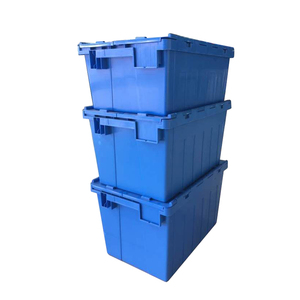
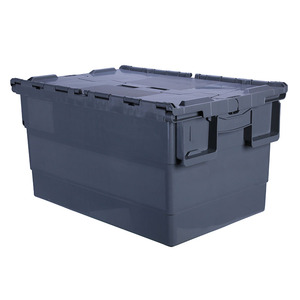
Modern Japanese fulfillment centers located along Tokyo Bay (Koto-ku, Shinagawa), Yokohama, and Nanko Osaka utilize high-speed automated storage and retrieval systems (AS/RS). Our 74L and 55L Attached Lid Polymer Totes feature anti-deflection ribbed bottoms engineered to run quietly on mini-load roller conveyors without jams, matching the standard JIS T11 pallet grid footprint precisely.
With thousands of storefront routes running across Seven-Eleven, FamilyMart, and Lawson networks, totes undergo 3 to 4 cross-dock replenishment cycles daily. Our copolymer plastic containers offer chemical resilience against sanitizing washdowns and thermal stability from -20°C in refrigerated sorting to 50°C during truck transit, completely replacing disposable corrugated paper boxes.
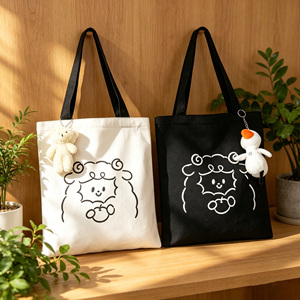
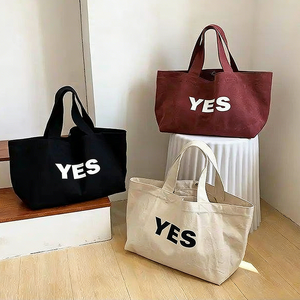
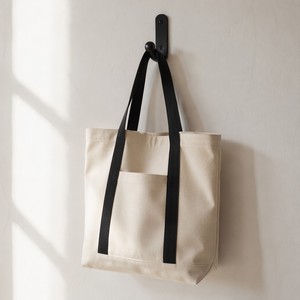
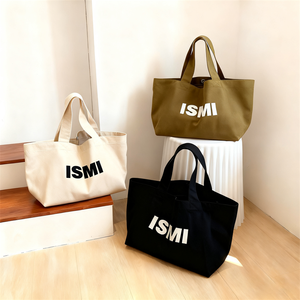
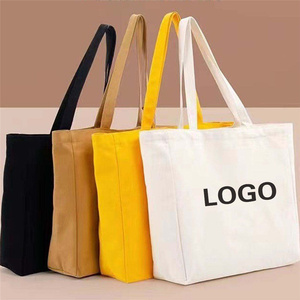
Japanese retail conglomerates (e.g., department stores in Ginza, Shibuya lifestyle chains) demand heavy-duty, heirloom-grade reusable bags in alignment with Japan's "Mottainai" waste-reduction philosophy. Our 16oz–20oz organic canvas totes feature dense combed yarns, double-folded internal edge taping, and flawless zero-thread-fray presentation required by Japanese quality inspectors.
A whitepaper perspective on regulatory shifts, demographic drivers, and circular supply chain requirements that define modern container sourcing across Japan.
Stringent caps on truck driver overtime in Japan (the 2024年問題) have caused an acute logistics capacity crunch. Shippers are aggressively adopting standardized returnable nested totes to slash dock loading and turnaround times from 45 minutes to under 12 minutes per truck.
Under Japan's Act on Promotion of Resource Circulation for Plastics, corporate procurement departments face steep penalties for disposable single-use packaging. Switching to 1,000+ cycle reusable polymer totes and GOTS organic cotton bags delivers quantifiable carbon credits for annual ESG audits.
The standard Japanese industrial pallet (JIS Z 0601: 1,100 mm × 1,100 mm, known as the T11 pallet) governs all warehouse bays. Our tote containers are dimensioned strictly in fractional increments (600×400 mm, 550×366 mm) to ensure 100% pallet surface utilization with zero perimeter overhang.
Japanese consumer product and apparel buyers adhere to zero-tolerance defect frameworks. Sourcing requires mandatory dual-head needle detection (2头检针机), metal screening to detect fragments below 0.8 mm, and chemical non-toxicity verification under JIS L 1096 and OEKO-TEX Standard 100.
Comparing raw structural integrity, resin composition, tensile yarn specifications, and test compliance metrics between our Japan-bound products and mass-market alternatives.
| Performance Parameter | Our OEM/ODM Heavy Duty Standard | Generic Commodity Products | Compliance Benefit for Japan Buyers |
|---|---|---|---|
| Fabric Density (Canvas Totes) | 16oz to 24oz (480–720 GSM) ring-spun cotton | 8oz to 10oz (240–300 GSM) open-end yarn | ✓ Non-sagging, long-term retail durability |
| Polymer Impact Strength (Plastic Boxes) | High-Izod impact polypropylene copolymer (PP) | Recycled brittle mixed polyolefin | ✓ Withstands -20°C freezer drops without fracture |
| Pallet Modular Compatibility | Strict JIS T11 (1100×1100 mm) modular ratios | Random non-standardized export sizing | ✓ Zero overhang, automated robotic palletizing |
| Handle Stitching & Stress Points | Heavy box-X stitch, 70-denier bonded nylon thread | Single straight stitch with cotton thread | ✓ Rated for 25 kg+ static and dynamic payload |
| Metal / Needle Detection Verification | 2-pass digital search head calibration (< 0.8 mm FE) | Visual spot check or uncalibrated check | ✓ 100% compliant with Japanese consumer liability laws |
| Ecological Certification | OEKO-TEX 100, GOTS Organic, GRS Recycled | No traceable chemical testing | ✓ Free of AZO dyes, heavy metals, and formaldehyde |
Combining end-to-end textile sewing workshops with heavy-tonnage plastic injection infrastructure under unified ISO 9001 management, eliminating trading company markups and supply chain uncertainty.
You deal directly with our production engineering staff—not trading agents or brokers. Cutting, heavy-gauge stitching, injection molding, silk-screen and heat transfer printing, sampling, and final packaging all take place on our dedicated factory floor. This ensures clear FOB/CIF pricing, immediate technical feedback, and total control over dimensional tolerances.
Japanese procurement cycles require exact physical proof before greenlighting container-load runs. We construct bespoke physical pre-production samples within 3 to 5 business days, delivering exact Pantone-matched fabrics, custom brand woven labels, and laser-textured mold inserts right to your desks in Tokyo, Osaka, or Nagoya for tactile evaluation.
From sample sign-off to export container dispatch, our standardized Lean lines maintain an agile 15 to 25-day production cadence. Export documentation—including Certificate of Origin (Form RCEP / EPA for tariff reduction), bilingual packing lists, bills of lading, and SGS inspection reports—is generated in-house for swift Japanese customs clearance at Tokyo, Yokohama, or Kobe.
Addressing the technical, regulatory, logistical, and commercial inquiries common to Japanese trading houses, retail buyers, and 3PL supply managers.
Every single textile tote bag undergoes a strict two-pass conveyorized needle detection test (双头检针机) calibrated to detect ferrous metal particles down to 0.8 mm diameter, conforming to JIS L 1096 safety protocols. Certified inspection tags (検針済) and batch test certificates are included inside every master carton before ocean loading.
Yes. Our 74L (600 × 400 × 365 mm) and related attached-lid containers are engineered to modularly pack 5 totes per layer in an interlocking pattern on standard Japanese 1,100 × 1,100 mm pallets (JIS Z 0601). This guarantees zero perimeter overhang, optimal truck space utilization, and safe automated stretch wrapping.
We recognize the rigorous standards of Japanese consumers. We operate at an AQL inspection tolerance of Major 1.0 / Minor 2.5 as standard, with optional 100% full-piece visual inspection upon request. Seam tension, colorfastness against rubbing (JIS L 0849), and drop testing (JIS Z 0202) are systematically verified and recorded.
Absolutely. We provide comprehensive private-label execution: Japanese care labels (JIS L 0001 compliant), high-precision JAN/EAN barcode stickers, RFID tag embedding, screen printing, high-density embroidery, and mold engraving for corporate logos on polymer lids and side panels.
Following pre-production sample sign-off, bulk production runs take 15 to 25 days. Ocean freight transit to major Japanese ports—Tokyo, Yokohama, Nagoya, Osaka, and Kobe—typically requires 7 to 14 days depending on the routing. Expedited air freight samples or trial batches arrive within 3 to 4 business days via DHL/FedEx.
Yes. Our export documentation team prepares official Certificates of Origin under the Regional Comprehensive Economic Partnership (RCEP) or applicable bilateral Economic Partnership Agreements (EPA), allowing Japanese importers to minimize or completely eliminate import customs duties upon entry.
For custom canvas and textile totes, our MOQ starts at 500 units per colorway for customized fabrics, and 300 units for standard stock colors. For attached-lid plastic totes with bespoke color matching, MOQ starts at 500 units, while in-stock colors can be ordered in lower pilot quantities to validate pilot automated lines.
We work flexibly with recognized Japanese trading companies and corporate entities. Standard initial terms are T/T (30% deposit upon order confirmation, 70% balance against Bill of Lading copy). For long-term procurement agreements and credit-verified corporate clients, we accept Irrevocable Letters of Credit (L/C at sight) or open account credit terms.
Connect directly with our engineering and export team. Request our complete 2026 technical catalog, material swatch sets, and competitive factory-direct quotation tailored for the Japanese market.