


The Uzbekistan Market Landscape: Commercial Transformation & Sourcing Shift
Uzbekistan has rapidly consolidated its position as the primary economic engine of Central Asia. Fueled by market liberalisation policies under the Development Strategy of New Uzbekistan, the expansion of modern retail infrastructure, international hypermarkets, and dynamic e-commerce channels (such as Uzum Market) has created an unprecedented surge in demand for commercial packaging and promotional textile bags. For commercial enterprises operating out of Tashkent, Samarkand, Bukhara, and Namangan, packaging is no longer viewed merely as an operational cost; it is now recognized as an essential extension of consumer brand equity and logistics efficiency.
Procurement directors and supply chain managers in Uzbekistan frequently encounter an acute bottleneck: while the domestic market processes tremendous volumes of raw cotton and basic synthetic fabrics, the domestic industrial capacity for precision-engineered custom printing, complex lamination, multi-layer thermal barriers, and international compliance documentation remains fragmented. Sourcing partners must deliver not only aesthetic customization, but also rigorous material consistency, accurate PMS (Pantone Matching System) reproducibility, and predictable transit integration along the Trans-Caspian International Transport Route (TITR) and southern rail corridors.
Macro Trends Driving Bag Customization across Uzbekistan
Four structural economic developments are reshaping how organizations in Uzbekistan source printed bags:
Substrate Selection & Print Calibration Matrix
Achieving optimal brand representation requires selecting the exact material formulation and printing process. The following engineering matrix matches commercial applications within the Central Asian trade perimeter to exact specifications:
| Material Base | Weight / Caliper | Printing Application | Tensile / Thermal Rating | Primary Industrial Use-Case |
|---|---|---|---|---|
| Virgin Kraft Paper | 120–220 GSM | Flexographic / Offset UV (1–6 Colors) | Tensile Load: 8–15 kg (Reinforced Patch) | Apparel flagship packaging, cosmetic boutiques, bakery retail. |
| Polypropylene Non-Woven | 70–120 GSM + OPP film | Rotogravure / High-Resolution Screen | Welded seams, burst resistance > 250 kPa | Supermarket checkouts, mass trade promotions, corporate gifts. |
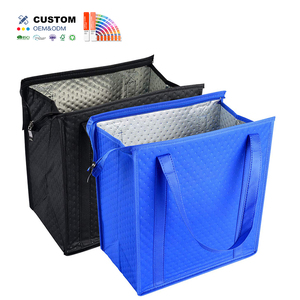
| Thermal Composite | Non-Woven + 2mm EPE + Foil | Screen Print / Flexo Foil Lam | Retains < 8°C for up to 4 hours | HORECA food deliveries, dairy delivery chains, chilled pharma. |
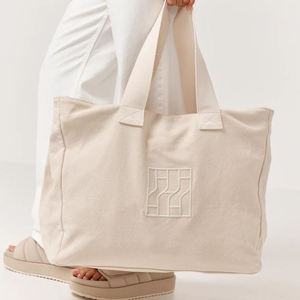
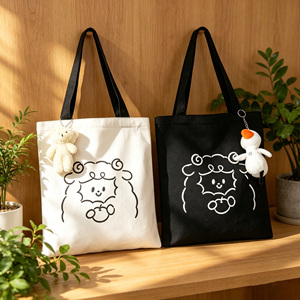
| Heavyweight Cotton Canvas | 280–450 GSM (10–16 oz) | Water-based Screen / Reactive Print | Tear strength > 180 N, washfast grade 4+ | Branded lifestyle fashion collections, university bookstore retail. |
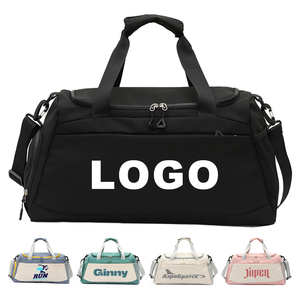
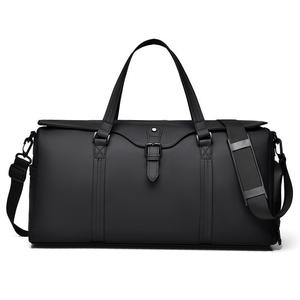
| High-Density Oxford Polyester | 300D – 900D with PU Coat | Thermal Transfer / High-density Embroidery | Hydrostatic head > 1,500 mm H2O | Sports athletics duffels, corporate commuter laptop backpacks. |
| Polyvinyl Chloride (PVC) | 0.25–0.50 mm transparent | Silk Screen / Hot Stamping Foil | Cold-crack resistance down to -10°C | Duty-free cosmetic kits, airline travel pouches, clinical packaging. |
Overcoming Central Asian Procurement & Logistics Vulnerabilities
Cross-border procurement into landlocked Uzbekistan involves navigating complex customs classifications, currency conversion frameworks, and transit corridors. Seasoned procurement leads mitigate systemic disruption by adhering to three core operational controls:
1. Direct Factory Coordination Over Sourcing Brokerage: Working directly with an end-to-end manufacturing plant eliminates hidden layer margins and provides direct contact with pattern engineers and master printers. When adjustments to ink rheology, handle webbing tensile thresholds, or Pantone calibrations are required, changes happen directly on the production line, cutting days off approval cycles.
2. Multimodal Trans-Caspian Transit Scheduling: Shipments routing through the Middle Corridor (Baku–Aktau/Turkmenbashi–Tashkent) or direct overland rail require precise carton palletization, desiccant loadout (averting condensation from crossing diverse microclimates), and consolidated customs declarations aligned with HS code classifications (e.g., 4202.12, 4202.92, 4819.20).
3. Documented Certification Architecture: Brand owners distributing products into regulated retail channels require documented compliance. Providing recognized testing certifications—such as OEKO-TEX® Standard 100 for textile safety, GOTS (Global Organic Textile Standard) for organic verification, and GRS (Global Recycled Standard) for post-consumer recycled fabrics—protects buyers from customs rejections and ensures retail compliance.