Engineered with high-density EPE closed-cell foam, ultrasonic leakproof thermal lining, and UV-resistant exterior textiles, our certified manufacturing lines deliver heavy-duty commercial thermal insulation and luxury custom utility solutions.
As the transcontinental bridge linking Europe, Central Asia, and the Middle East, the Republic of Türkiye represents one of the world's most dynamic trading and distribution hubs. Over the past decade, Türkiye's rapid growth in on-demand quick commerce (spurred by pioneer platforms such as Getir and Yemeksepeti Banabi), pharmaceutical cold-chain compliance, massive Mediterranean tourism infrastructure, and expansive supermarket retail chains (such as Migros Ticaret A.Ş., BİM, A101, and Şok) has ignited unprecedented demand for high-performance insulated thermal cooler bags.
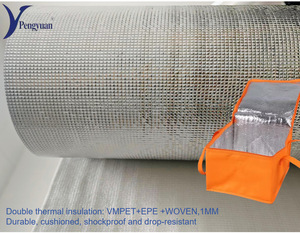
While Turkish local textile converters possess remarkable prowess in conventional cut-and-sew operations, the specialized multi-layer thermal barrier market requires deep polymer engineering: high-density cross-linked polyethylene (XLPE), expanded polyethylene (EPE) closed-cell foam extrusion, aluminum metallized polyester film (VMPET) thermal reflection coatings, and high-frequency hermetic radio-frequency (RF) welding. As a premier original design manufacturer (ODM) and original equipment manufacturer (OEM) rooted in China's industrial epicenter, our manufacturing facilities bridge this precise technological niche, delivering unmatched cost-to-performance economies of scale directly to Turkish corporate buyers, promotional procurement firms, and logistics conglomerates.
Technical Value Increment: Our composite thermal structures utilize multi-layer thermal barrier technology, achieving thermal conductivity ratings as low as λ ≤ 0.032 W/(m·K), guaranteeing that perishables, clinical biologics, and premium chilled items maintain strict temperature zones (2°C to 8°C) under ambient Turkish summer temperatures exceeding 42°C in Antalya and Adana.
Thermal degradation within portable cooler containers occurs via three concurrent thermodynamic pathways: conduction, convection, and thermal radiation. Superior OEM cooler bag manufacturing demands that each barrier layer functions harmoniously to impede all three mechanisms:
| Layer Stratum | Technical Material Specification | Density / Weight | Thermodynamic & Functional Barrier Role |
|---|---|---|---|
| Outer Shell | Heavy-Duty 600D/900D/1680D Oxford PU / 840D TPU | 280 – 480 gsm | Abrasion resistance, tensile tear mitigation, UV degradation resistance, hydrostatic water column >10,000mm. |
| Radiant Barrier | Vacuum Metallized PET (VMPET) / Pure Foil | 12 – 25 microns | Reflects up to 97% of radiant infrared heat back into the ambient or thermal core, neutralizing solar radiation. |
| Insulation Core | Expanded Polyethylene (EPE) / NBR Rubber Foam | 5mm – 25mm thickness | Closed-cell micro-cellular pore structure prevents convective heat transfer and drastically minimizes thermal conduction. |
| Inner Lining | Food-Grade PEVA / FDA-Approved Seamless TPU | 0.15mm – 0.50mm | Seamless leakproof containment, antimicrobial surface, non-toxic direct food contact (LFGB/FDA compliant), effortless wipe-clean. |
In contrast to low-grade stitched bags where needle punctures breach the thermal and hydrostatic seal, our high-performance cooler collections leverage hot-air ultrasonic welding and RF seam fusing. This engineering process ensures an absolute water-tight internal bladder, enabling dry ice, wet ice packs, and condensation fluids to remain strictly contained without structural weeping or perimeter thermal bridge leakage.
Procuring thermal packaging for the Turkish commercial ecosystem requires an acute understanding of unique domestic macro-environments, climatic variations, and operational workflows:
Motorcycle couriers operating in Istanbul's hyper-dense traffic require ruggedized, ergonomic backpack cooler bags fitted with reinforced composite backplates, 1680D abrasion-proof shells, and modular thermal dividers that isolate hot rotisserie items from ice cream and fresh dairy.
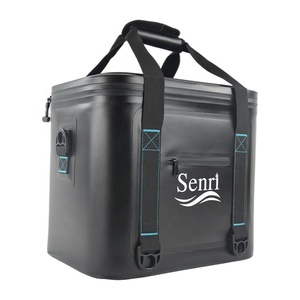
Luxury resort chains and yacht charter operators across Bodrum, Marmaris, and Antalya deploy branded, UV-stabilized TPU soft-sided cooler tote bags. These containers endure marine saltwater conditions while keeping beverage cans below 4°C during daylong coastal excursions.
Turkish regional pharmaceutical depots moving temperature-sensitive insulin, vaccines, and biologics rely on validated thermal carry kits with integrated digital data-logger pockets, guaranteeing strict 2°C–8°C compliance across Ankara, Izmir, and Eastern Anatolian routes.
Annual Erzak distribution initiatives by municipalities, corporate foundations, and NGOs require high-volume, cost-optimized non-woven laminated thermal bags capable of distributing fresh poultry, meat, and butter safely to beneficiary households during religious observances.
The purchasing criteria of Turkish procurement directors and supply chain managers have undergone fundamental shifts over the past 24 months, shaped by national sustainability initiatives, inflation-driven optimization, and strict import regulations:
Aligned with Turkey's "Zero Waste" (Sıfır Atık) initiative, major retail brands require cooler bags fabricated from Global Recycled Standard (GRS) certified Post-Consumer Recycled (RPET) yarns, converting discarded plastic bottles into durable, eco-friendly external fabrics.
Commercial users are pivoting away from heavy, rigid rotomolded plastic iceboxes. Modern TPU soft coolers offer equivalent 48-72 hour ice retention while slashing shipping freight volume by 65% due to collapsible, space-saving geometric packaging.
Turkish Ministry of Trade and customs inspect thermal linings for phthalates, azo dyes, and heavy metals. Chinese export partners must present comprehensive REACH, LFGB, and RoHS laboratory certifications issued by accredited testing bodies (SGS, TÜV, Intertek).
As an established manufacturing partner catering to high-volume European and Turkish brands, our production framework is anchored in technical precision, full traceability, and vertical integration:
1. Computerized Pattern Nesting & Automatic Laser Cutting: Our computerized CAD cutting tables optimize fabric yield by up to 96.5%, dramatically curbing raw material waste and guaranteeing millimetric pattern accuracy across mass production batches.
2. Advanced Branding & Surface Decoration: We provide full Pantone PMS color-matching across technical fabrics, screen printing with non-phthalate silicone inks, high-precision thermal transfer sublimation, 3D high-frequency sonic embossing, rubber patch vulcanization, and woven damask labeling tailored to private-label collections.
3. Rigorous In-House Quality Assurance: Every manufacturing run undergoes four-stage quality gates: incoming raw material chemical and hydrostatic validation (AATCC 127), inline seam tensile strength checks (ISO 13934), thermal retention benchmark testing inside controlled environmental chambers, and AQL 2.5 final pre-shipment inspections.
 OEKO-TEX® Standard 100
Tested for harmful substances & chemical safety
 GOTS Certified
Ecological and organic processing standards
 GRS Recycled Poly
Verified post-consumer recycled raw materials
Addressing key operational, financial, and regulatory considerations for corporate importers and distributors across Türkiye:
Partner with an industry-leading OEM/ODM manufacturer. From CAD prototype sampling and multi-layer thermal engineering to seamless Turkish customs clearance documentation, our team is equipped to execute your project flawlessly.
Get a Quote