
Reusable Vacuum Hot Keep Thermal Soup Insulated Food Jar Stainless Steel Lunch Box
Shell: SUS304 Food-Grade Metal
Thermal Retention: 12H Hot / 24H Cold
Testing: FDA, LFGB, BPA-Free

Engineered for high-volume brand programs, direct retail-ready packaging, and uncompromising adherence to REACH, LWG, and Proposition 65 benchmarks.

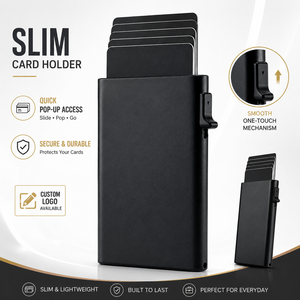
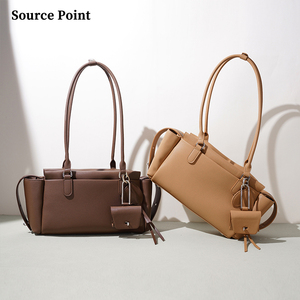
A data-backed comparative audit of the top 10 international leather wallet manufacturing regions, analyzing raw hide provenance, labor proficiency, regulatory overheads, and landed freight economics.
Istanbul anchors the European luxury nearshoring frontier. Turkish tanneries process world-class native bovine and ovine skins with strict adherence to REACH regulations. Boasting duty-free customs integration with the European Union (ATR certificate) and exceptional sample-to-bulk velocities of 15–25 days, Turkish manufacturers bridge bespoke artisanal precision with modern mechanized production lines.
Unmatched worldwide in vegetable tanning heritage, aniline drum dyeing, and artisanal patinas. Italian exporters set the standard for ultra-luxury leather accessories. However, exceptionally high baseline MOQs, extended production calendars (60–90 days), and surging labor overheads increasingly restrict pure Italian fabrication to flagship luxury tiers with four-digit retail targets.
India maintains an extensive, vertically integrated cattle and water buffalo hide ecosystem. Tamil Nadu and West Bengal represent major global hubs for mass-volume leather wallet programs. While unit costs remain highly attractive, international buyers must enforce stringent on-site chrome-recovery inspections and monitor batch-level stitch consistency rigorously.
Benefiting from extensive foreign direct investments (FDI) originating from South Korea and Taiwan, Vietnamese facilities specialize in industrial-scale OEM/ODM programs. While domestic tannery capacities are expanding, the sector remains heavily dependent on wet-blue imports from Australia and the US, adding vulnerability to trans-oceanic freight disruption.
Shiling in Huadu District remains the planet's most comprehensive hardware, micro-lining, zipper, and leather accessories supply ecosystem. Automation is widespread, offering unbeatable mechanical precision for modern hybrid wallets. However, shifting geopolitical tariffs and rising coastal manufacturing wages are prompting enterprise sourcing teams to diversify.
Specialized in high-precision, mid-to-luxury leathergoods fabrication, Portugal delivers boutique-level attention to detail, flawless hand-painted edge coats, and reliable social compliance audits. Production capacities are tailored for agile, premium collections rather than hyper-scale container promotions.
Mexico (León): Enjoys direct USMCA duty-free overland transit into the North American market with deep bovine tanning integration. Spain (Ubrique): The secretive handcraft sanctuary powering Paris-based luxury maisons with generational saddle-stitching mastery. Pakistan (Sialkot): Dominant in heavy-duty split leathers and motorcycle-grade accessories with accessible price structures. Indonesia: Fast-maturing alternative for assembly programs leveraging competitive labor indices and bilateral export agreements.
| Manufacturing Hub | Predominant Hide Types | Average Sampling Lead | Bulk Lead Time | EU / US Customs Exposure | REACH & LWG Compliance |
|---|---|---|---|---|---|
| Türkiye (VYGR Hub) | Full Grain Bovine, Calfskin, Lamb | 3–5 Days | 15–25 Days | 0% to EU (Customs Union ATR) | Fully Audited / Direct LWG |
| Italy | Vegetable-Tanned Bovine, Vachetta | 14–21 Days | 60–90 Days | Intra-EU Free Movement | Certified Golden Tier |
| India | Water Buffalo, Semi-Veg Bovine | 10–15 Days | 35–50 Days | Standard Tariffs (GSP Dependent) | Requires Rigorous Tannery Audit |
| China | Corrected Grain Cowhide, Embossed Splits | 5–7 Days | 25–35 Days | Subject to Section 301 / EU Tariffs | Broad Variability by Province |
| Mexico | Pull-Up Cowhide, Heavy Bovine | 7–10 Days | 30–45 Days | 0% to USA/Canada (USMCA) | Intermediate Tannery Traceability |
Enterprise procurement professionals must adjust their supplier evaluations around three structural market shifts: verifiable bio-traceability, structural hardware hybridization, and near-shore supply security.
With the implementation of the EU Deforestation Regulation (EUDR), importers can no longer accept undocumented leather shipments. Progressive brands require Tier-4 geolocation tracking tracing raw hides back to birth farms. Suppliers investing in blockchain laser-etched hide codes and chrome-free (zeolite or aldehyde) wet-white tanning now enjoy preferential tier-1 contractor status.
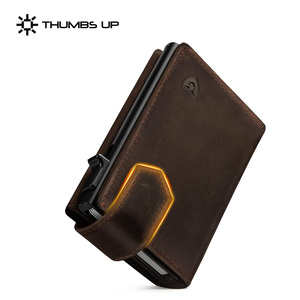
Traditional bulky leather bi-folds are steadily losing market share to CNC-milled 6061-T6 aluminum cardholders wrapped in hand-stitched premium hides. Technical integration demands high precision tolerances: card-ejection mechanisms cannot jam, and internal Faraday-cage copper-nickel mesh liners must block 13.56 MHz RFID/NFC frequencies without compromising leather tactile softness.
Extended 120-day ocean freight pipelines from East Asia introduce immense markdown risk and excessive working capital tie-ups. Retail buyers in London, Frankfurt, and New York are actively re-architecting procurement toward Mediterranean hubs. Turkish manufacturing enables rapid air/express road logistics to Continental Europe within 4 to 6 business days, slashing pipeline exposure.
A prevalent pitfall in discount leather importing is the latent conversion of trivalent chromium (Cr-III) into carcinogenic hexavalent chromium (Cr-VI) during marine transport. Excess heat, relative humidity above 75%, and photo-oxidation in ocean containers trigger this chemical reaction, causing customs border rejections at EU checkpoints. Working with audited facilities utilizing vegetable tannins, synthetic re-tanning polymers, and airtight climatic testing safeguards your product investments.
Get a QuoteDirect from our owned production floor in Istanbul, Türkiye. By eliminating intermediate sourcing agents, we guarantee uncompromising material fidelity, factory-direct wholesale pricing, and verified international compliance.
Cutting, skiving, stitching, debossing, and final packaging occur directly within our owned Istanbul factory. Buyers speak directly with production engineers, guaranteeing transparent pricing and rapid issue resolution.
Following pre-production prototype sign-off, bulk production runs are finalized in 15 to 25 business days. Our established domestic hide pipeline ensures zero raw material bottlenecks.
Customs documentation, ATR forms for zero-duty European imports, certificates of origin, and comprehensive commercial declarations are managed directly by our international trade desk.
Strict alignment with OEKO-TEX Standard 100, GOTS organic standards for internal lining canvases, and GRS (Global Recycled Standard) for RPET components and thread work.
Essential guidance answering critical questions regarding material selection, sample approval gates, tariff codes, and testing tolerances.
Consult directly with our master pattern engineers in Istanbul. Share your digital tech pack or reference concepts to receive transparent unit costing and custom prototype samples within 24 hours.
Get a Quote