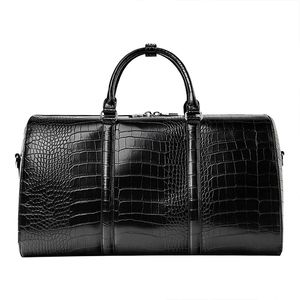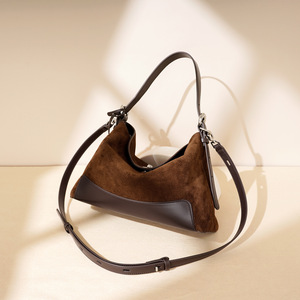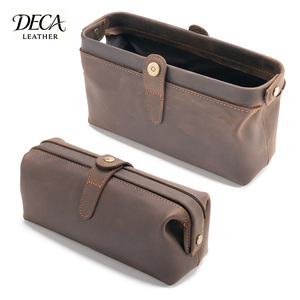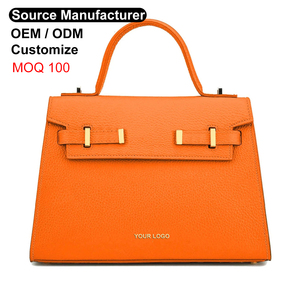
Explore production-tested archetypes precision-engineered across top-grain cowhide, crazy horse pull-up leather, structured PU, and embossed textures. Each silhouette is configured for bespoke brand customization, custom metal hardware, and international freight readiness.
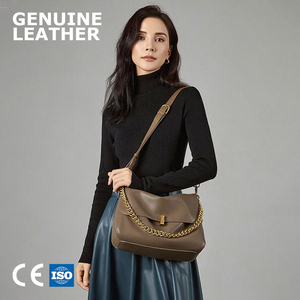 Top-Grain Cowhide
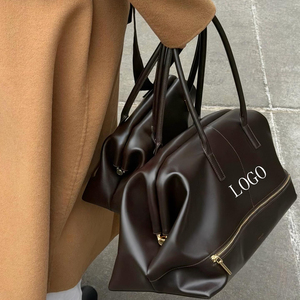 Functional Luxury
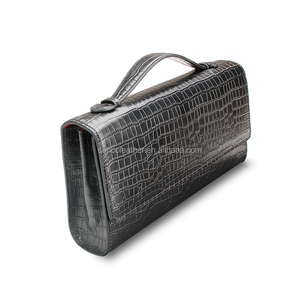 LWG / BSCI Audited
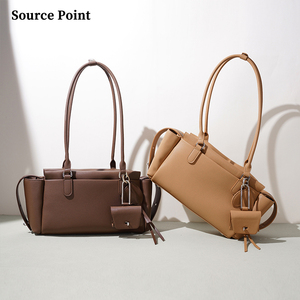 Trending Silhouette
Sourcing executive-grade custom leather accessories in the contemporary global commerce paradigm requires a sophisticated balance of chemical compliance, structural craftsmanship, lean inventory flexibility, and geopolitical tariff efficiency. Premium fashion conglomerates, independent boutique direct-to-consumer labels, and international department store chains are increasingly departing from monolithic, long-lead commodity contracts in favor of agile, vertically integrated OEM (Original Equipment Manufacturer) and ODM (Original Design Manufacturer) partnerships.
Historically dominated by Italian artisanal clusters in Tuscany and mass-volume industrial complexes across Guangdong and Tamil Nadu, the global leather goods export matrix has undergone seismic transformations. Today, premier manufacturing hubs such as Istanbul, Türkiye serve as critical transcontinental manufacturing bridges, combining European technical design disciplines, certified Leather Working Group (LWG) environmental adherence, and preferential duty treatment (such as ATR and EUR.1 certifications for European Union customs clearance) with competitive production cycles that outperform Far-East supply chains by weeks.
When selecting a contract manufacturing partner, international procurement directors evaluate regions across five non-negotiable vectors: hide grading standards, minimum order quantity agility, custom metal hardware tooling, chemical safety (EU REACH / Prop 65 compliance), and shipping lead time. The matrix below outlines how primary manufacturing regions align against enterprise sourcing requirements.
| Manufacturing Cluster | Primary Strengths | Typical Minimums (MOQ) | Lead Times (Bulk) | Compliance & Certifications | Best Suited Commercial Use |
|---|---|---|---|---|---|
| Türkiye (Istanbul / Aegean) | Direct factory ownership, master edge-painting, rapid sampling, zero-tariff EU shipping | Low to Mid (50–300 pcs) | 15–25 Days | LWG Silver/Gold, BSCI, OEKO-TEX, REACH | Contemporary Designer Brands, Corporate Gifting, Fast-Scale Private Label |
| Italy (Florence / Scandicci) | Heritage vegetable tanning, ultra-luxury cachet, traditional saddle finishing | High (300–500 pcs) | 60–90 Days | Vera Pelle, ISO 14001, SA8000 | Ultra-Luxury Couture, High-Margin Heritage Collections |
| China (Guangzhou / Dongguan) | Gigantic scale, comprehensive hardware supply ecosystems, synthetic PU prowess | Moderate to High (300–1,000 pcs) | 35–50 Days | BSCI, ISO 9001, Sedex | High-Volume Department Stores, Global Mass Market |
| India (Chennai / Kanpur) | Abundant buff calf leather, competitive raw hide labor, heavy work bags | High (500+ pcs) | 45–60 Days | LWG, SA8000 | Rugged Travel Duffles, Workwear Satchels, Value Retail |
| Portugal (Porto / São João) | Refined European footwear-aligned leather assembly, artisan leather goods | Moderate (150–300 pcs) | 40–60 Days | EU Green Deal Standard, REACH | Boutique European Lifestyle Collections |
Strategic purchasing decisions require anticipatory insight into material science, regulatory mandates, and shifting consumer demographics. Review the five core developments dominating the 2025–2030 international leather export landscape.
Stringent compliance dictates that luxury fashion brands phase out toxic heavy metals. Demand has surged for wet-white synthetic tanning and olive-leaf vegetable tanning protocols certified by the Leather Working Group (LWG Gold/Silver), eliminating Hexavalent Chromium (Cr VI) while meeting California Proposition 65 and REACH annex XVII requirements.
To reduce inventory exposure and eliminate write-downs, global brands are utilizing computerized laser-guided nesting cutters and CNC oscillating knife tables. These technologies bypass expensive steel die-press molds, allowing manufacturers to launch pilot batches of 50 to 100 units with immediate 48-hour prototype validation.
The modern luxury handbag is an engineering composite. Future developments spotlight regenerated leather fiberboards (Salpa), GRS-certified recycled ocean plastics (RPET) interior fabrics, and micro-aerated neoprene shockproof backing for dedicated laptop compartments that preserve supple hide silhouettes without sagging.
Corrosion resistance is now a non-negotiable benchmark. Standard electroplated zinc alloy is being superseded by vacuum PVD coatings in brushed champagne gold, matte gunmetal, and polished nickel. These coatings endure 72+ hour salt-spray chamber testing without tarnishing, flaking, or oxidizing in humid transit.
Anticipating incoming EU Ecodesign for Sustainable Products Regulations (ESPR), custom manufacturers are embedding encoded UHF RFID and NFC chips beneath leather pocket linings. This enables seamless end-consumer provenance tracking, authenticity validation, and raw material circularity documentation.
Suez Canal unpredictability, trans-oceanic freight surcharges, and rising maritime emissions penalties have prompted brands to shift sourcing to hubs within 3 to 7 days overland transit to European capitals. Turkey's strategic geographic hub status offers transit speeds that slash working capital lead times by 65%.
True value in luxury and commercial leather manufacturing is rooted in the meticulous execution of foundational leather craft and industrial assembly. When our engineers review a client's technical design pack (Tech Pack) or reference photograph, we benchmark the project against six core technical specifications:
We classify natural hides into four specific grades based on tensile durability, surface aesthetic, and yield optimization:
The distinction between cheap promotional assembly and investment-grade private label lies in the edges. Inferior manufacturers fold un-skived leather, resulting in bulging, irregular seams. Direct custom manufacturing requires mechanical bell-skiving to taper hide margins down to 0.4 mm before folding, cementing, and top-stitching.
For raw-edge luxury designs, our artisans execute a four-coat edge painting sequence utilizing water-based polymer acrylics (such as Italian Fenice or Giardini paints). Each application is oven-dried, mechanically hand-sanded with fine 800-grit silicon abrasive, and re-buffed to achieve an elastic, mirror-smooth edge seal that never cracks under temperature fluctuations from -15°C to 45°C.
| Component / Element | Commercial Grade Standard | Artisanal OEM / Export Grade Standard | Testing Verification Protocol |
|---|---|---|---|
| Stitching Thread | Spun Polyester #40 | Continuous Filament Bonded Nylon V69 / V92 (Gutermann / Coats) | Tensile breaking force > 5.4 kgf (ASTM D2256) |
| Edge Paint Adhesion | 1–2 Single Coats, Air-Dried | 4-Pass Hand-Painted, Sanded, Heat-Ironed Seal | Bally Flexometer Test 20,000 cycles (ISO 5402) |
| Hardware Metallurgy | Flash-Plated Hollow Zinc | Solid Forged Brass or PVD-Coated Zamak-5 Alloy | Neutral Salt Spray Chamber 72 Hours (ISO 9227) |
| Handle Rivet Reinforcement | Single Washer Surface Clamp | Internal Salpa Reinforcement + Dual Backing Steel Plates | Handle Jerk / Drop Shock Test 15 kg x 5,000 cycles |
| Zipper Performance | Standard Nylon Coil #3 | Custom Polished Symmetrical Teeth (YKK Excella / SBS Metal #5/#8) | Crosswise Strength > 650 N (EN 16732) |
Eliminate non-manufacturing middlemen, trading company markups, and communication barriers. Work directly with the factory floor in Istanbul, Türkiye, where master leather craftsmanship converges with modern supply chain reliability.
No trading company brokerages. Direct access to our pattern masters, cutting tables, stitchers, and quality assurance supervisors ensures total control over margins and construction fidelity.
Send CAD files, physical reference samples, or rough sketches. Our dedicated sampling studio creates master acrylic patterns, cuts pilot hides, and delivers golden pre-production samples within days.
While Far-East factories require 60 to 90 days lead time, our lean manufacturing assembly lines complete full bulk production runs in just 15 to 25 days following pre-production sample sign-off.
All leather is sourced from LWG Gold/Silver-rated tanneries. Complete social compliance (BSCI) and rigorous laboratory testing for azo dyes, formaldehyde, and phthalates are standard with every order.
Located in Istanbul at the nexus of Europe and North America, our in-house trade documentation specialists issue ATR and EUR.1 certifications, securing 0% customs duties into the EU and UK.
From blind debossing, foil hot-stamping, and custom-cast zinc zipper pullers to jacquard-woven interior linings, hangtags, and custom FSC gift boxes, your brand identity is executed to perfection.
Every bag undergoes a rigorous 4-stage inspection: incoming hide sorting, post-cutting panel verification, in-line seam checking, and final packaging inspection conforming to ISO 2859-1 standards.
Communicate effortlessly with professional account managers fluent in English, German, French, Spanish, Russian, and Turkish, providing responsive project tracking across every milestone.
Authoritative answers to the most common engineering, commercial, and logistical questions posed by enterprise buyers, luxury sourcing agents, and supply chain analysts.
VYGR Bags operates as a direct OEM and private-label manufacturing facility based in Istanbul, Türkiye. We maintain complete in-house operations across digital leather pattern grading, computerized hide cutting, hand skiving, multi-stage edge painting, clean-room stitching, custom hardware assembly, and export container packing. Sourcing directly with us eliminates trading agency markups and ensures unmediated technical oversight.
Because we operate flexible modular production lines, our standard MOQ starts at 50 to 100 units per style for bespoke genuine leather handbags, and 200 units for synthetic/PU leather constructions. This allows luxury labels and boutique designers to launch seasonal capsules without holding excess inventory, while our multi-line facility scales seamlessly to 10,000+ units per month for global distribution programs.
Our typical development cycle spans 5 to 7 business days for initial pattern drafting and pre-production counter-sample creation. Once the pre-production sample is approved and bulk materials are allocated, full mass production is completed in 15 to 25 days. Air cargo transit to the EU or North America requires 2 to 4 days, while road freight into Continental Europe averages 5 to 7 days door-to-door.
Yes. Approximately 60% of our custom OEM/ODM projects originate from reference photographs, hand sketches, or physical archival pieces. Our pattern engineers dismantle the silhouette virtually, develop digital vector templates, specify appropriate internal reinforcements, and suggest matching hide weights to bring your vision to life.
We source hides exclusively from tanneries certified under the Leather Working Group (LWG Gold/Silver) and verified under European Union REACH regulations. We provide documentation confirming that our leathers and synthetics are free from restricted substances, including Chromium VI, Dimethyl Fumarate (DMF), Azo dyes, and lead/cadmium, ensuring full compliance for sale across the EU, UK, and North America.
We offer blind debossing, heat foil stamping (gold, silver, rose gold, holographic), high-precision laser engraving, silk-screen and digital UV print, embroidered appliques, and custom CNC-machined metal hardware (die-cast zinc alloy or solid brass) with your brand's engraved emblem, finished in high-micron electroplate or durable PVD coatings.
All export documentation is handled by our internal logistics department. Under the EU–Turkey Customs Union, shipments to the European Union and the UK qualify for zero customs import duties accompanied by an official ATR or EUR.1 movement certificate. For US and Canadian clients, we provide commercial invoices, packing lists, and Certificates of Origin for smooth customs processing via DDP, FOB, or CIF terms.
All orders follow the international AQL (Acceptable Quality Limit) 2.5 standard for major defects and 4.0 for minor defects. Every individual bag undergoes visual inspection, stitching tension checks, zipper cycle testing, and weight-bearing handle load tests before placement into branded dustbags and export cartons. In the rare event of a manufacturing defect, replacement units or commercial credits are processed immediately.