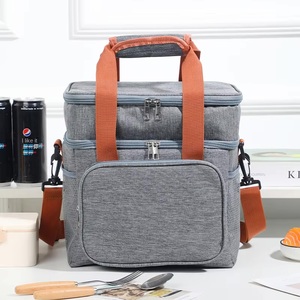
Soft-Sided Heavy Duty
Large Oxford Portable Cooler Bag Lunch Picnic Camping Beach Cooler Bag Thermal Insulated Shoulder Beer Holder with Handle
600D Poly
EPE Foam
PEVA Liner

Engineered for high thermal resistance, food-contact compliance, and rugged outdoor resilience. Review our core OEM & private label configurations across soft-sided Oxford, leakproof TPU, and dual-wall hard coolers.
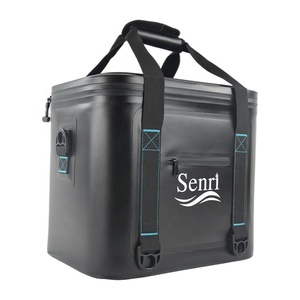
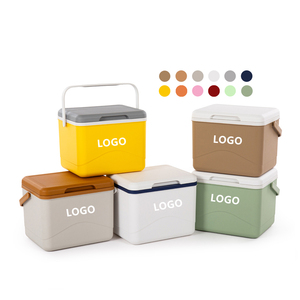
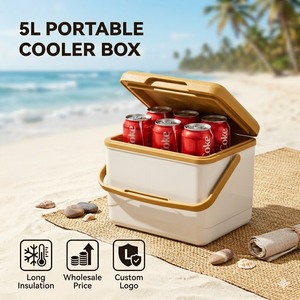
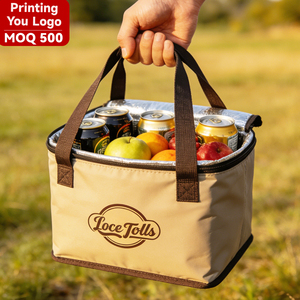
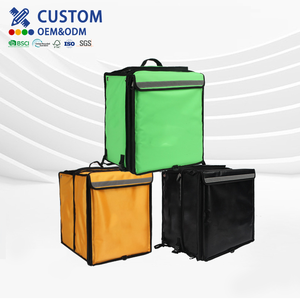
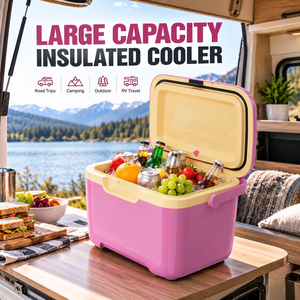
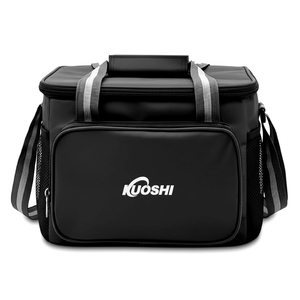
Enterprise procurement requires mapping tier-1 manufacturers against specific core competencies, material tooling capabilities, supply chain security, and tariff implications.
| Manufacturer / Cluster | Primary Production Technology | Core Product Specialization | Avg. Lead Time | Regulatory & ESG Rating | Supply Chain Advantage |
|---|---|---|---|---|---|
| 1. VYGR Bags (VGR Group, Turkey) | Cut & Sew, RF Welding, In-House Thermal Lamination | Custom B2B Picnic Coolers, TPU Soft Coolers, Reusable Bags | 15–25 Days | OEKO-TEX / GOTS / GRS | Direct Istanbul Hub; Zero-Tariff EU Access; 24h Sampling |
| 2. Igloo Products Corp. (USA) | High-Pressure Blow Molding & Polyurethane Injected Roto | Hard Chests, Heavy Marine & Large Wheels Coolers | 45–60 Days | NSF / FDA Approved | Extensive domestic US warehousing; high minimum runs |
| 3. Coleman Company (Newell Brands, Global) | Industrial Injection Molding & Expanded Polystyrene Foaming | Consumer-tier hard ice chests & entry soft lunchboxes | 60–75 Days | ISO 9001 / BSCI | Massive scale retail footprint; standardized catalogs |
| 4. YETI Holdings (Contract Facilities Global) | Heavy-Wall Rotomolding & High-Frequency TPU Sealed Welds | Premium Expedition Soft & Hard Rotomolded Coolers | 90+ Days | FDA / ASTM Food Contact | Global brand cachet; very high unit acquisition cost |
| 5. Dometic Group (Sweden / Global) | Rotomolding, Precision Gasketing, Powered Refrigeration | Passive high-density insulated chests & 12V hybrid units | 40–50 Days | CE / RoHS / ISO 14001 | High technological depth across cold-chain applications |
| 6. Pelican Products (USA / Mexico) | Military Injection & Extreme Impact Polypropylene Resins | Indestructible Tactical & Commercial Cooler Lockers | 35–50 Days | MIL-SPEC / IP67 Rating | Unrivaled durability; weight penalty on commercial distribution |
| 7. Ningbo Icebox Outdoor OEM Cluster (China) | Rotomolding & PU Foaming OEM Tooling | White-label Hard Rotomolded Ice Boxes | 35–45 Days | BSCI / ISO 9001 | Low tool cost; subject to maritime transit volatility and tariffs |
| 8. Xiamen Soft-Seam Bag Cluster (China) | High-Frequency PVC/TPU Welding & 600D Sewing Lines | Soft Cooler Backpacks, Lunch Totes, Foil Liners | 30–40 Days | SMETA / BSCI | High volume soft bag sewing; extended port-to-port lead times |
| 9. Gio’Style (Italy) | Polypropylene Injection & EPS Sheet Conversion | European Household Picnic Coolers & Passive Ice Packs | 25–35 Days | EU Food Contact (EC 1935) | Southern European footprint; focused mostly on retail designs |
| 10. Polar Bear Coolers (USA Contract) | Nylon Luggage Grade Sewing & Open-Cell Thermal Liners | Duffel Picnic Coolers & Specialized Nylon Packs | 30–45 Days | Consumer Safety Act Compliant | Proven soft-pack brand; limited European manufacturing agility |
Thermal retention in commercial picnic cooler engineering is governed by Fourier’s Law of Heat Conduction and the reduction of convective air circulation within the insulating matrix. When evaluating bulk manufacturing contracts, enterprise procurement directors must assess the specific thermal conductivities ($\lambda$), densities, and moisture-barrier interfaces of each core assembly layer.
1. Closed-Cell Polyurethane (PU) Foam (Rigid Coolers): Employed in dual-wall PP and rotomolded ice boxes. High-pressure polyurethane foam expands directly within the hollow cavity between the inner liner and outer skin, creating a cohesive closed-cell core with a nominal density of 38 to 45 kg/m³. Because of its microscopic cell structure filled with low-conductivity blowing agents, PU foam prevents radiant thermal transfer, providing structural rigidity while holding ice for 72 to 120 hours.
2. Nitrile Butadiene Rubber (NBR) vs. Expanded Polyethylene (EPE) (Soft Coolers): Commodity promotional cooler bags typically incorporate 4mm to 8mm of low-density EPE foam. While cost-effective, EPE undergoes cell collapse under pressure, rapidly diminishing insulating efficacy. In high-performance OEM production, closed-cell NBR (density: 50–65 kg/m³) or closed-cell cross-linked polyethylene (XLPE) is laminated between an outer textile shell (such as 840D TPU-coated nylon) and an antimicrobial food-grade inner liner, preserving structural loft and thermal barriers even under compressive packing forces.
3. High-Frequency Radio Frequency (RF) Dielectric Sealing: Conventional sewing needles introduce hundreds of micro-perforations through which chilled air escapes and ambient humidity enters. Professional-grade cooler manufacturers use RF welding machines operating at 27.12 MHz to melt the polyurethane molecules of adjacent thermoplastic layers into a singular, molecularly fused seam. This achieves an IPX7 immersion-rated hermetic seal that prevents interstitial moisture saturation and ensures zero condensation leakage.
From 600D/900D coated recycled polyester (RPET) to puncture-resistant 840D double-sided TPU and UV-stabilized food-contact polypropylene resins, outer layers are engineered to resist abrasion, UV breakdown, and mechanical shear.
Precision-calibrated core barriers including thick cross-linked NBR, high-loft open-cell foam blankets, and vacuum-injected closed-cell polyurethane cores tailored to achieve certified cold retention benchmarks ranging from 8 hours to 5 full days.
Seamless ultrasonic or RF welded PEVA, BPA-free TPU, and silver-infused antimicrobially treated thermal aluminum sheets certified compliant with FDA 21 CFR 177.1350 and European LFGB food-safety frameworks.
Structural realignments in global logistics, environmental regulations, and corporate sustainability mandates are reshaping cooler development programs worldwide.
Enterprise brands are abandoning virgin petrochemical plastics in favor of Global Recycled Standard (GRS) post-consumer RPET woven fabrics, bio-based closed-cell foams derived from sugarcane polyols, and circular PP structures that qualify for closed-loop lifecycle audits across North American and European retailers.
Unpredictable trans-Pacific container freight rates and geopolitical tariffs have driven major Western buyers toward nearshore manufacturing clusters. Direct manufacturing from Istanbul, Turkey provides a 5 to 7 day road freight transit time to mainland Europe, cutting supply pipeline lead times by more than 60% compared to East Asian maritime routes.
Modern commercial picnic coolers are evolving beyond static beverage containers. New product development integrates passive RFID temperature tags for food safety verification, quick-access magnetic dry-storage lids, and dual-zone thermal chambers allowing simultaneous frozen beverage and fresh produce isolation within a single unit.
A true OEM/ODM industrial manufacturing facility in Istanbul, Türkiye, eliminating middleman markups, accelerating turnaround, and managing export compliance end-to-end.

Independently tested and verified free from harmful chemicals, azo dyes, formaldehydes, and phthalates across all fabric surfaces and trims.
Complete traceability and environmental verification for organic cotton picnic totes and natural textile cooler collection variants.

Certified chain-of-custody verifying post-consumer recycled content in RPET woven exteriors, webbing, and insulation components.
To safeguard brand reputation and prevent costly field failures, our factory subjects all picnic cooler production batches to rigorous physical testing based on ASTM, ISO, and MIL-SPEC quality benchmarks prior to packaging:
• Hydrostatic Pressure & Inversion Leakage Testing (AATCC 127 Adapted): Soft cooler compartments are loaded with liquid at room temperature to 100% rated capacity and inverted for 60 minutes. Premium RF welded bags undergo zero droplet egress testing under 1.5 psi internal pneumatic pressure to confirm watertight integrity.
• Handle Tensile & Cyclic Jerk Testing (ASTM D751): Handles, carry straps, and attachment hardware are subjected to dynamic pull-load cycling. A cooler loaded to 1.5x nominal payload is cycled through 5,000 drop-catch repetitions at 1 Hz frequency, verifying zero seam tearing or buckle distortion.
• Accelerated Thermal Decay Chamber Verification: Sample units packed with calibrated ice ratios (1:1 ice-to-payload volume) are placed inside an environmental control chamber regulated at 38°C ± 1°C and 60% relative humidity. Temperature dataloggers track internal thermal rise at 10-minute intervals until ice melt exceeds 90%, establishing certified thermal ratings.
Essential technical, commercial, and logistical guidelines for corporate sourcing directors, wholesale buyers, and promotional merchandising agencies.
VYGR Bags operates its own dedicated cutting, sewing, welding, printing, and assembly facilities in Istanbul, Türkiye. Enterprise buyers contract directly with the facility producing their goods, ensuring complete pricing transparency, zero agent commissions, direct technical consultation, and strict confidentiality agreements.
Standard production runs for customized textile and soft-sided TPU cooler bags start at 500 units per colorway. For fully bespoke injected or rotomolded hard cooler chests requiring dedicated aluminum or steel tooling, MOQs typically range from 1,000 to 2,000 units depending on the complexity of the mold and custom Pantone pigments.
We use premium food-grade PEVA or heavy-duty thermoplastic polyurethane (TPU) linings infused with non-migratory antimicrobial agents. Our films remain flexible down to -20°C without micro-fracturing, and their non-porous structure resists persistent food and beverage odor absorption.
Our facility offers comprehensive in-house branding, including high-precision screen printing, UV digital printing, dye sublimation, 3D silicone heat transfers, heavy embroidery, debossed badges, molded rubber zip-pullers, woven brand labels, and full-color custom carton packaging.
We generate all necessary export paperwork in-house, including commercial invoices, packing lists, EUR.1 movement certificates (offering preferential 0% customs duty inside the EU), certificates of origin, and compliance test files covering FDA, LFGB, REACH, and California Proposition 65.
Once pre-production prototypes and artwork proofs receive client approval, standard mass production takes 15 to 25 business days. Transit time from Istanbul to major European logistics hubs is 5 to 7 days by road freight, and 14 to 20 days by ocean container to major East Coast North American ports.
Consult with our Istanbul engineering team today. Send us your technical drawings, sketches, or volume forecasts, and receive a complete DDP manufacturing proposal with pre-production sampling within 24 hours.