Precision-manufactured across our integrated facilities: ergonomic student packs, reinforced book bags, campus lunch chillers, and modular organizational cases built for demanding institutional deployment.
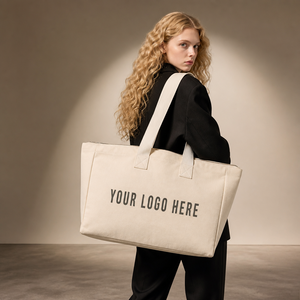
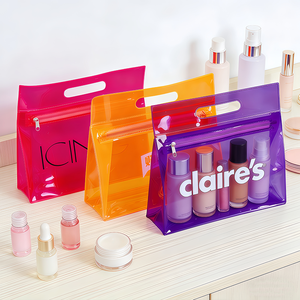
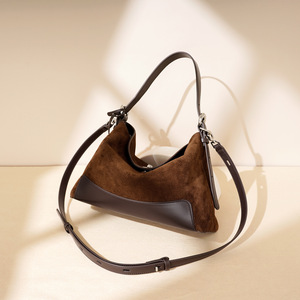
As a vertically integrated manufacturing powerhouse located in Istanbul, Türkiye, VYGR Bags (a VGR Group company) eliminates intermediary broker margins, offering brands, school districts, and institutional wholesalers complete technical command over every seam, buckle, and textile grain.
We are a direct physical manufacturing plant, not a trading desk. Computerized automated fabric laying, laser cutting, double-needle bar-tack sewing, silk-screen printing, sublimation transfer, and structural inspection occur strictly within our own production halls.
Operating at the geopolitical crossroads of Europe, Central Asia, and North America provides substantial logistical advantages. European freight delivers by road within 3 to 7 days, avoiding vulnerable oceanic choke points and minimizing container volatility.
Institutional school bag procurement demands rigorous chemical and mechanical safety. We formulate all student carry-gear under strict OEKO-TEX Standard 100, Global Recycled Standard (GRS), and GOTS guidelines, fulfilling strict CPSIA and REACH limits.
School backpacks withstand severe dynamic loads throughout an academic year. A textbook-laden pack undergoes cyclic shocks, abrasion against abrasive surfaces, and heavy zipper lateral stress. Below is our internal engineering performance benchmark comparison.
| Component / Stress Test | Standard Commercial Grade | VYGR OEM Factory Standard |
|---|---|---|
| Shoulder Strap Bar-Tacking | Single pass (12-16 stitches) | Double cross-box box-X (32-38 stitches) |
| Tensile Load Resistance | 15 kg static load failure | 35+ kg dynamic drop test (5,000 cycles) |
| Textile Tear Strength (ASTM D2261) | 180 N (Standard 420D Nylon) | 360 N (High-Density 900D RPET / Oxford) |
| Zipper Lateral Pull Force | 450 N (No-brand plastic coil) | 850+ N (Reinforced YKK/SBS #8 / #10 Gauge) |
| Water Ingress Repellency | Basic spray coating (300mm) | Multi-layer Hydrostatic PU Backing (1500mm+) |
| Ergonomic Spine Ventilation | Flat unpadded polyester sheet | Multi-density molded EVA air-mesh channels |
According to international pediatric orthopedic guidelines (including EN 1729 standards), a student's daily school pack should not exceed 10% to 15% of their total body weight, and kinetic shock must be centered along the upper thoracic spine rather than pulling downward on the lumbar vertebrae.
To resolve this challenge for our OEM private-label clients, our design engineering studio utilizes S-Curve Ergonomic Anatomical Contouring coupled with internal lightweight PE support boards. This prevents heavy binders from collapsing outward, keeping center of gravity snug against the spine. Our high-density 12mm open-cell foam shoulder cushions absorb downward pressure while maintaining long-term resilient memory.
Institutional buyers, global educational distributors, and retail license holders face transforming consumer expectations and regulatory mandates. Integrating these emerging paradigm shifts into procurement planning ensures sustained margin protection and brand compliance.
Virgin polyester is rapidly facing carbon penalty taxes in European and North American markets. Modern RFP tenders now mandate a minimum of 60% to 100% Post-Consumer Recycled (PCR) RPET woven yarn certified under GRS. Traceability via chemical tracers and verified transaction certificates (TC) is transitioning from a premium differentiator to an absolute market entry prerequisite.
With 1:1 school device programs standardizing across primary and secondary schools, internal backpack sleeves must safely house Chromebooks, iPads, and laptops. Modern OEM construction demands suspended "Floating Laptop Cradles" that prevent device corners from bottoming out when dropped violently on hard classroom surfaces, combined with integrated cable pass-throughs.
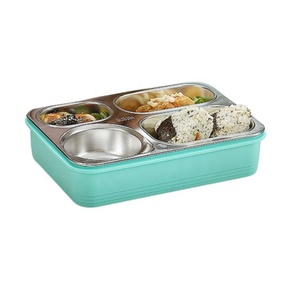
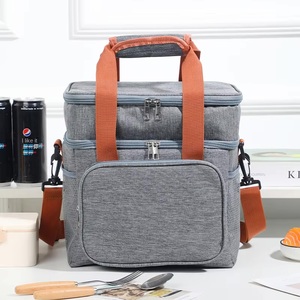
Sourcing lone backpack silhouettes is yielding to cohesive, multi-item campus ecosystems. High-growth private label brands procure 3-in-1 and 4-in-1 sets: primary book packs paired with matched thermal bento lunch cooler pouches, water-resistant gym shoe sacks, and heavy-gauge pencil storage pouches using synchronized textile yardage to maximize fabric yield efficiency.
Massive container rate oscillations and long 60-day Pacific voyages have made conventional Asian sourcing riskier for tight back-to-school delivery windows. Procurement heads are increasingly adopting dual-sourcing models: splitting bulk orders with strategic nearshore Turkish factories to ensure guaranteed 15-25 day replenishment flexibility and inventory agility.
Detailed technical and logistical answers directly from our factory engineering team to assist your procurement directors, merchandising specialists, and compliance auditors.
Our standard production runs typically start at 500 to 1,000 units per colorway or silhouette for fully custom OEM builds using standard inventory-stocked fabrics (such as 600D Polyester, Heavy Canvas, or Cordura-type weaves). For custom-dyed Pantone textiles or custom-engineered all-over prints, the standard run ranges between 1,000 and 2,000 units depending on textile mill minimums. We also accommodate flexible pilot production runs for established brands launching new private-label collections.
All fabrics, trims, zippers, buckles, and printing pigments deployed across our facility are thoroughly tested to ensure absolute non-toxicity. We enforce rigorous bans against lead, total phthalates (BBP, DBP, DEHP, DIBP, DINP, DIDP), AZO compounds, PFAS, and heavy metals. Every material batch can be verified through OEKO-TEX Standard 100 or certified third-party testing labs (SGS, TÜV, Intertek) matching strict European REACH Annex XVII regulations and U.S. Consumer Product Safety Improvement Act (CPSIA) standards.
Upon receipt of your tech pack or reference sample, our physical pattern-making and sampling department develops an initial pre-production sample within 5 to 7 working days. Following your physical sample sign-off and colorway approvals, bulk assembly, stitching, printing, packaging, and QA typically take between 15 to 25 calendar days depending on total order volume and complexity. Nearshore transit to continental European hubs requires only an additional 3 to 7 days by bonded road freight.
Our in-house capabilities encompass screen printing (plastisol, water-based, and discharge), 3D high-density rubberized heat-transfer decals, high-resolution edge-to-edge sublimation printing on performance polyesters, precision embroidery, high-frequency embossing/debossing on PU leather trims, custom metal zipper puller casting, molded silicone badges, and woven damask private-label labeling.
Yes. Our veteran master pattern-makers routinely develop accurate physical patterns from photos, rough sketches, or existing competitor benchmarks. We reverse-engineer the internal volume, structural gussets, seam allocations, foam thicknesses, and zipper curves to produce a calibrated pre-production golden counter-sample for client approval before cutting any bulk yardage.
We deploy high-tensile bonded nylon/polyester threads and enforce computerized bar-tack stitching (32 to 38 stitches per junction) at all primary stress junctures, including upper shoulder strap harness insertions, haul handle foundations, and lower webbing anchor loops. Critical load-bearing seams are backed with inner nylon webbing reinforcement tape and bound with anti-fray edging.
We manage complete export documentation in-house. This includes Commercial Invoices, Packing Lists formatted per shipping container or pallet, Certificates of Origin, EUR.1 / ATR movement certificates for tariff exemptions across Europe, Bills of Lading / CMR consignment notes, and GRS/GOTS material transaction chains of custody to ensure immediate customs clearance.