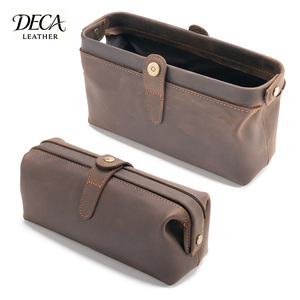
Crazy Horse Leather Vintage Toiletry Bag Genuine Leather Portable Travel Cosmetic Organizer
Heavy Hardware · Custom OEM
Contact Us

Explore benchmark OEM/ODM models precision-engineered in our integrated facilities, featuring reinforced stitch integrity, customized substrates, and export-grade branding treatments.
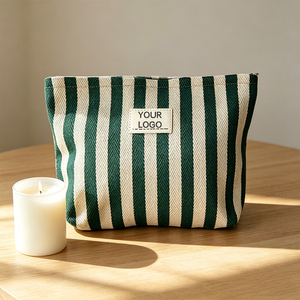

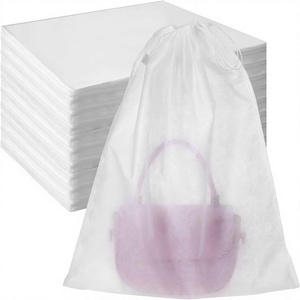
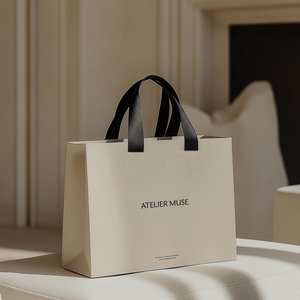
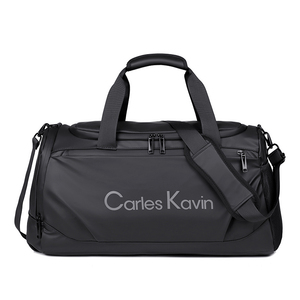
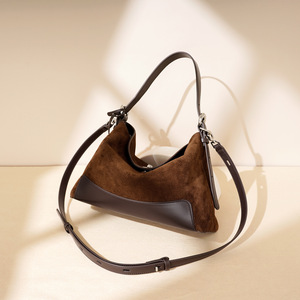
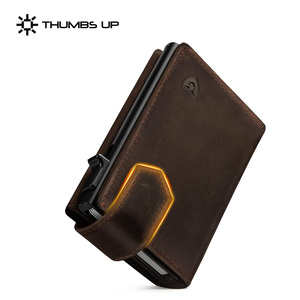
In modern industrial textile procurement, shifting regulatory frameworks—such as the EU Corporate Sustainability Due Diligence Directive (CSDDD) and aggressive plastic-elimination mandates across North America—have fundamentally transformed bag sourcing. Jute (Corchorus olitorius / Corchorus capsularis) has evolved from an agrarian staple into a scientifically engineered industrial polymer alternative. As a leading manufacturer operating out of an integrated production base, we provide corporate procurement officers, merchandising directors, and brand partners with scalable, laboratory-tested natural textile formulations designed for high mechanical performance and carbon footprint reduction.
Achieving commercial durability in jute manufacturing requires managing intrinsic natural fiber variances: lignin embrittlement, raw fiber moisture dynamics, and inconsistent yarn linear density (measured in tex or grist). Unlike intermediary trading entities that aggregate stock from disparate, uncontrolled sub-vendors, our direct factory system enforces strict control from raw baling to woven lamination. We deploy automated high-precision looms capable of weaving standard plain (taffeta) weaves, dense double-warp twills, and refined juco (intimate blends of 75% natural jute and 25% virgin or post-consumer organic cotton).
Every bolt of fabric passes rigorous pre-shrinking and hydro-stabilization protocols to control shrinkage within a precise ±2.5% variance. Whether manufacturing large grocery carriers, luxury cosmetics pouches, or heavy-duty retail duffels, our factory balances tensile integrity, seam burst metrics, and eco-chemical compliance (REACH, California Proposition 65, and zero-AZO standards).
| Grade / Blend Class | Areal Density (GSM) | Tensile Strength (Warp / Weft) | Standard Lining / Backing | Optimal Branding Technique |
|---|---|---|---|---|
| Standard Commercial Jute | 280 – 340 GSM | ≥ 480 N / ≥ 430 N | 0.02mm Hydrophobic Food-Grade PP Film | Water-based Screen Print, Flexographic |
| Fine Yarn Heavy Canvas Jute | 360 – 420 GSM | ≥ 620 N / ≥ 580 N | Biodegradable PLA / Vegetable Starch | Precision Screen, Pigment Transfer |
| Refined Juco Hybrid (Jute-Cotton) | 300 – 380 GSM | ≥ 550 N / ≥ 520 N | Unlined / Organic Cotton Twill Sheeting | High-Definition Digital Heat Transfer, Embroidery |
| Heavy Industrial Golden Burlap | 450 – 550 GSM | ≥ 780 N / ≥ 710 N | Water-based Polyurethane Coating (PU) | Debossed Leather Patches, Rotary Stencil |
B2B sourcing professionals face rapid shifts in eco-packaging compliance and end-user behavior. Procurement decisions now require balancing verifiable life-cycle analysis (LCA) data against unit costs and transport logistics:
Procurement teams are moving away from traditional PVC and conventional fossil-fuel poly-laminations. Corporate buyers require bio-based PLA (Polylactic Acid) and water-based, corn-starch polymer coatings that provide liquid resistance while remaining commercially compostable (EN 13432 certification).
Global brands are reducing multi-tier vendor exposure by partnering with factories that handle raw weaving, cut-and-sew, digital proofing, and door-to-door multi-port freight forwarding under one roof. Single-facility oversight eliminates sub-tier margin stacking and quality handover points.
Retail consumers expect sustainable textiles to deliver a soft hand-feel alongside structural rigidity. The market is shifting from scratchy utility bags toward enzymatically treated juco substrates paired with ergonomic tubular cotton-webbing handles, metallic hardware accents, and genuine leather trims.
The manufacturing process for industrial jute bags has evolved across three key generations:
1. First-Generation Utility Burlap (Conventional Agrarian): Coarse, unprocessed loose-weave hessian held together by basic non-reinforced chain stitches. These suffered from excessive natural lint shedding, high hydrophilic moisture re-absorption, rough texture, and low dimensional stability under load.
2. Second-Generation Laminated Carriers (Commercial Promotion): Addressed structural collapse by laminating extruded poly-film (PE/PP) to the reverse side. While this stabilized the weave, it frequently failed cross-hatch ink adhesion tests, generated unpleasant solvent odors, and created disposal challenges at end-of-life.
3. Third-Generation Engineered Eco-Hybrids (Our Current Standard): We implement enzymatic scouring that strips harsh plant surface waxes, producing a smooth surface that supports micro-line screen printing and fine embroidery. We use internal cross-box stitching, reinforced stress-point bar-tacks (withstand ≥25 kg load tests), and non-toxic, odorless, plasticizer-free internal barriers. Every design is built to withstand repeated commercial laundering and transport stress.
Institutional CompetenceUnlike trading companies that rely on disconnected sub-contractors, our production lines give commercial buyers end-to-end control over structural specifications, quality assurance, and delivery schedules:
Our in-house master pattern engineers generate digital CAD patterns and physical prototypes within 72 hours. We evaluate handle ergonomics, seam fatigue, and gusset stability before authorizing mass production lines.
We operate multi-station automatic carousel screen systems, precision heat transfers, laser embossing, and digital CMYK printing. Custom Pantone PMS formulas are spectrophotometer-checked to preserve brand consistency.
Production runs undergo strict AQL 2.5/4.0 inspections. We test seam bursting force, carry-handle pull strain, stitch per inch (SPI) consistency, and needle-detector safety screening before seaworthy pallet consolidation.
Beyond natural bast fibers, our manufacturing capacity covers 140–600 GSM heavy-duty cotton canvases, water-repellent performance synthetics, RPET woven textiles, and genuine crazy-horse leathers.
By purchasing raw fibers in bulk lots and producing our own handles and fittings, we protect B2B margins. Our direct pricing shields clients from agent commissions and broker layer markups.
Our in-house logistics team manages export documentation, Certificate of Origin filings, bill of lading releases, and customs clearance protocols for North American and European ports of entry.
Clear, direct answers regarding production lead times, material performance, custom tooling, and order compliance.