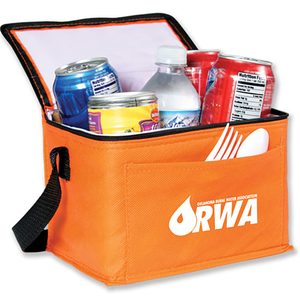
Curated technical luggage, functional duffles, and modular organizers manufactured to international compliance standards. Engineered for commercial durability and market distinction.
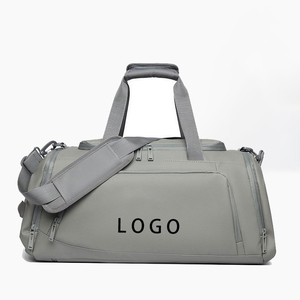
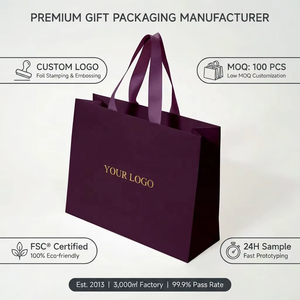
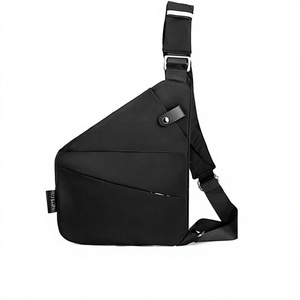
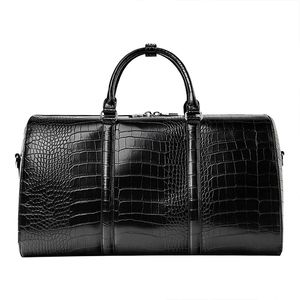
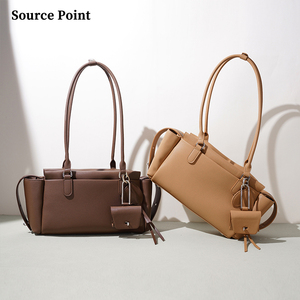

Direct industrial capacity eliminates communication latency, safeguards intellectual property, and guarantees competitive per-unit landing costs.
We operate as a primary manufacturer rather than a trading broker. From digital patterning and automated laser cutting to synchronized sewing lines and ultrasonic bonding, complete industrial execution occurs internally. Sourcing heads negotiate directly with production engineers, resulting in accurate timelines and immediate technical clarity.
Our raw material procurement pipelines adhere to stringent regulatory environments across the EU and North American corridors. We provide end-to-end traceability for OEKO-TEX Standard 100, GOTS organic cotton, and GRS certified RPET fabrics, backed by full technical documentation.
Mitigate commercial risk through structured physical prototyping. Every contract locks production parameters against a client-approved master sample. We rigorously test dimensional load resilience, colorfastness, zipper cycle life, and seam tensile strength before allocating bulk raw inventory.
International freight clearance demands thorough documentation. Our compliance team handles specialized customs invoices, harmonized tariff code verification, origin declarations, and packaging compliance tests internally, ensuring low dwell times at destination discharge ports.
Commercial travel bag procurement has pivoted from basic transaction price evaluations to multifaceted supply security, material circularity, and digital compliance oversight.
Procurement teams are prioritizing verified Post-Consumer Recycled (PCR) polyester and waterborne, solvent-free Polyurethane coatings. Regulatory directives, such as the European Union’s Corporate Sustainability Due Diligence Directive (CSDDD), necessitate end-to-end supply chain transparency. Bulk manufacturers must present transaction certificates (TCs) verifying recycled content at the fiber stage to avoid regulatory tariffs.
Modern consumers demand versatile carry gear suitable for work, gym sessions, and weekend travel. Consequently, technical travel bag design focuses on internal modularity: magnetic attachment anchors, segregated waterproof wet/dry compartments, and antimicrobial pocket linings. Tier-one factories are actively integrating high-frequency welded seams to replace conventional needle stitching in critical waterproof zones.
Forward-thinking retail groups require luggage constructed with scannable QR micro-labels linked to Digital Product Passports. These systems record raw material provenance, carbon footprint lifecycle analysis, and end-of-life recycling recommendations directly into distributed ledger platforms, protecting brands against unsubstantiated marketing claims.
| Performance Dimension | Legacy Sourcing Model | Advanced Contemporary Sourcing |
|---|---|---|
| Material Specification | Virgin PVC and standard low-density nylon | GRS-certified RPET, GOTS cotton, Bio-PU, and recycled TPU |
| Hardware & Fasteners | Generic unbranded metal zinc zippers | YKK/SBS coated waterproof reverse-coil zips & anodized aluminum |
| Quality Gate Metrics | Post-production spot checking (AQL 2.5/4.0) | In-line robotic visual inspection & raw material tensile testing |
| Lead Time Structure | 45–60 days fixed cycle without API visibility | 15–25 days rapid production backed by live production ERP monitoring |
| Compliance Verification | Self-declared compliance statements | Third-party audited certifications (OEKO-TEX, GRS, BSCI, Sedex) |
Clear, direct answers to common questions regarding minimum orders, customization techniques, tooling cycles, and global compliance testing.
Our baseline production schedule runs between 15 to 25 days following client approval of physical pre-production samples and finalize digital artwork files. Complex projects involving bespoke tooling for injected buckles, custom-milled hardware, or specialized yarn-dyed jacquards typically require 30 to 35 business days.
We deploy in-house hydrostatic head testing machinery to verify coatings withstand pressures between 5,000mm to 15,000mm H2O, tailored to the functional product brief. Critical seams undergo seam-burst testing and are reinforced with thermo-bonded PU tape to prevent capillary moisture leakage through stitch lines.
For high-abrasion surfaces, we recommend sonic-welded silicone labels, laser-etched anodized alloy badges, or structural debossing on full-grain and PU surfaces. Heavy-density 3D embroidery and precision screen printing using phthalate-free inks are also applied for prominent logos across canvas and ripstop nylon.
Standard custom luggage models using inventory running yardage start at an accessible threshold of 300 to 500 units per colorway. Fully customized constructions requiring custom pantone-dyed fabric mills, dedicated weave architectures, or bespoke mold manufacturing establish an entry line of 1,000 units.
Yes. When specifying certified recycled or organic fabrics, we provide full chain-of-custody documentation, including batch-specific GRS or GOTS Transaction Certificates (TCs). These documents verify that your production volume aligns directly with audited post-consumer or organic agricultural supplies.
Our pattern engineering studio routinely reverse-engineers technical specifications from physical samples, 2D sketches, or CAD tech packs. We generate comprehensive manufacturing blueprints, cutting files, and material cost breakdowns for client sign-off prior to prototype cutting.
Connect directly with our engineering and procurement team for technical material consulting, rapid physical sampling, and competitive volume tier quotations.
Get a Quote