Direct OEM/ODM Industrial Hub · Certified Export Standard
China Best OEM Handbag Production Manufacturers & Exporters
Precision Private-Label Handbag Engineering, Sustainable Material Integration (LWG/GRS/OEKO-TEX), and Global Agile Supply Chain Solutions for Premium Global Brands.
Factory Portfolio
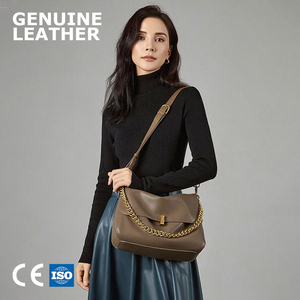
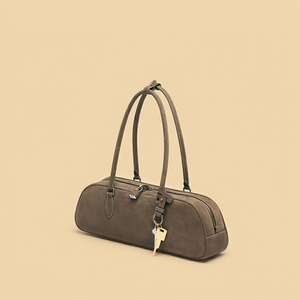
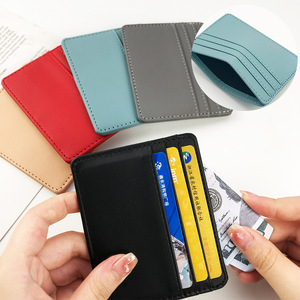
Featured OEM Contract Handbag & Leather Goods Solutions
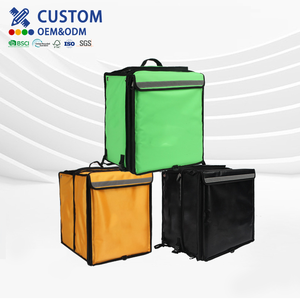
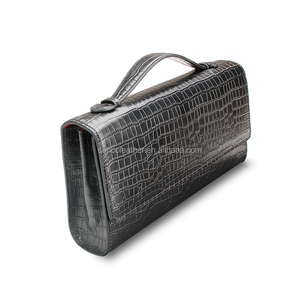
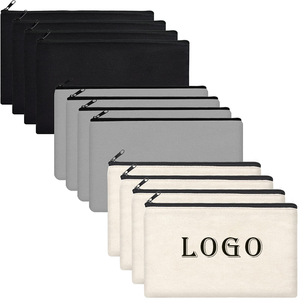
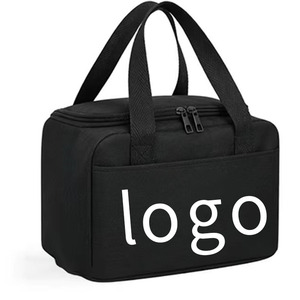
From technical insulated carriers and GOTS organic canvas bags to LWG-certified luxury cowhide clutches, explore our export-grade manufacturing benchmarks built to rigorous EU & US compliance specifications.
Engineering Mastery Across China's Premier Handbag Supply Ecosystem
We eliminate the overhead and friction of trading brokers by giving international fashion conglomerates, independent boutique labels, and retail giants direct engineering access to our integrated manufacturing facilities.
Precision Digital Cutting & Splitting
Equipped with computerized oscillating knife cutters and laser die systems, our automated cutting department guarantees cutting tolerances within ±0.2mm. This ensures structural parity between your 3D digital patterns and physical bulk yields across genuine hides and complex multi-layered technical textiles.
Certified ESG & Chemical Compliance
Our production facilities adhere strictly to ISO9001 quality management, BSCI social workplace accountability, and LWG (Leather Working Group) tannery sustainability standards. Every raw material roll is tested to comply with REACH (EU), California Proposition 65, and CPSIA heavy metal prohibitions.
Proprietary Tooling & Hardware Foundry
Hardware failure degrades brand equity. We integrate precision CNC die-casting for zinc alloy, brass, and stainless steel hardware accessories. Featuring multi-layer rack-electroplating with electrophoretic clear-coat lacquering, our buckles, chains, and turn-locks withstand over 72 hours of neutral salt spray testing.
Executive Whitepaper
The Strategic Transformation of Handbag Contract Manufacturing (2025–2030)
The global leather goods and premium handbag market is undergoing a structural paradigm shift. In prior sourcing cycles, international procurement teams prioritized lowest unit FOB cost above all else. In the modern omnichannel retail climate, procurement leadership is measured on agility, ESG compliance transparency, total landed cost control, and digital product passport (DPP) readiness. As China continues its transition from a volume-centric assembly shop to an advanced industrial manufacturing ecosystem, top-tier OEM/ODM manufacturers are pioneering integrated solutions that fuse traditional handcraft precision with automated digital workflows.
1. Material Innovation: The Ascent of Bio-Based Polymers & Certified Circularity
Consumer sentiment in European and North American metropolitan demographics is moving toward uncompromising environmental responsibility. The modern brand can no longer afford to source unverified synthetic polyurethanes (PU) derived exclusively from fossil fuels. Leading OEM operations in China are now deploying high-performance bio-based alternatives, including apple pomace leather, mycelium fungi structures, pineapple leaf fibers (Piñatex), and waterborne solvent-free PU. Concurrently, for utilitarian, canvas, and travel product categories, the baseline requirement has shifted to GRS-certified Recycled Polyethylene Terephthalate (RPET) woven fabrics, GOTS organic cotton canvas, and marine plastic recovery yarns.
Technical Specification Note for Sourcing Directors:
When procuring solvent-free waterborne PU, verify the absence of Dimethylformamide (DMFa < 5 ppm) under DIN EN 17131. Our production lines utilize exclusively non-toxic waterborne polyurethane matrices that eliminate volatile organic compounds (VOCs) while preserving flex-resistance ratings above 100,000 cycles at -10°C (Bally Flexometer test standard ISO 5402-1).
2. Precision Hardware Engineering and Environmental Stress Tolerance
In luxury and contemporary handbag construction, hardware components—such as lock closures, D-rings, swivel clips, and chain links—account for up to 40% of the bag's perceived tactile luxury and a disproportionate share of post-purchase consumer warranty claims. Premium OEM manufacturing requires rigorous validation of metallic integrity. We mandate multi-stage barrel and rack electroplating protocols using environmental nickel-free baths, topped with electrophoretic baked coatings to eliminate oxidative discoloration. In accordance with ASTM B117 standards, our metal components are tested in simulated marine atmosphere chambers, guaranteeing resilience against sweat, humidity, and atmospheric oxidation across varying global retail climates.
3. Stitch Density, Edge Paint Adhesion, and Structural Engineering
True luxury contract manufacturing distinguishes itself at the micrometric level. Consider the edge coat: lower-tier suppliers apply two heavy coats of low-viscosity paint that dry rapidly but crack after minimal seasonal exposure. Our workshop standard mandates a five-step edge-refining procedure: beveling, foundational edge priming, infrared oven curing, intermediate mechanical sanding, and two ultra-thin coats of Italian polyurethane edge enamel, followed by final hot-iron waxing. Similarly, seam construction is strictly governed by stitch-per-inch (SPI) calibrations tailored to material density—typically 7 to 8 SPI for soft lambskin, 6 to 7 SPI for structured calf leather, and heavy-gauge locked stitching for load-bearing canvas handles.
Technical Comparative Matrix
Traditional Trading Broker vs. Direct Industrial OEM Factory
Evaluation Parameter
Direct Industrial OEM Factory (Our Model)
Middleman / Trading House
Standard Small Workshop
B2B Unit FOB Cost
Factory Direct (Zero Margin Markup)
15% - 35% Intermediary Margin Added
Unpredictable / Volatile Quotations
Pre-Production Sampling
3 - 5 Days (Internal CAD/CAM Prototyping)
14 - 25 Days (Outsourced to sub-shops)
10 - 15 Days (Manual paper patterns)
Chemical Compliance
Full REACH / Prop 65 / CPSIA Dossier
Inconsistent / Transferred liability
No internal laboratory validation
Quality Control Standard
MIL-STD-105E AQL 1.5 / 2.5 In-Line & Final
Spot checks at consolidation port
Basic visual inspection only
IP & Design Security
Enforceable NNN Agreements & Secure Vaults
Open market risk of design sharing
High risk of sample replication
Bulk Production Lead Time
15 - 25 Days (Synchronized lines)
45 - 60 Days (Fragmented control)
Subject to backlog delays
Future Procurement Vectors
How Procurement Teams Are De-Risking Handbag Supply Chains
Strategic supply chain directors are rethinking how they allocate inventory risk, manage raw material lead times, and optimize container packing configurations.
Agile Small-Batch Reorder Systems
Rather than committing to inflexible 5,000-piece production runs 6 months ahead of season, forward-thinking brands use our dynamic modular lines to launch collections with pilot runs of 300 to 500 units per colorway, backed by reserved greige fabrics and hardware blanks ready for 14-day re-orders.
Digital Product Passports (DPP) & RFID
As the EU Ecodesign for Sustainable Products Regulation (ESPR) becomes active, every imported handbag will need auditable proof of origin and material lifecycle documentation. We embed customized UHF RFID chips, NFC interactive tags, and laser-etched QR identifiers directly into the lining during production assembly.
Packaging Optimization & CBM Compression
Global ocean freight rates demand spatial optimization. Our structural design studio engineers custom collapse-flat geometries and structural gusset innovations that reduce empty void volume in outer cartons by up to 42%, drastically reducing sea and air logistics expenses per handbag unit.
Authoritative insights into our production minimums, prototyping cycles, intellectual property protection, and quality assurance standards.
What is your baseline Minimum Order Quantity (MOQ) per SKU?
Our standard production MOQ ranges from 300 to 500 units per style for genuine leather goods (which can be split across 2-3 standard colorways), and 500 to 1,000 units for canvas totes, nylon backpacks, and cosmetic bags. For established enterprises testing new market launches, we offer tiered pilot sampling runs subject to raw material inventory availability.
How does your factory protect our proprietary design IP and molds?
Before reviewing tech packs or physical reference samples, we execute binding, bilingual non-disclosure, non-use, and non-circumvention (NNN) agreements. All custom tooling—including bespoke embossing dies, zinc casting molds, and proprietary hardware shapes—remains your exclusive intellectual property and is securely held in our tooling registry.
What is the typical turnaround timeline for samples versus bulk production?
Following tech pack sign-off and material confirmation, physical pre-production samples are completed within 3 to 7 business days. Bulk production turnaround averages 15 to 25 business days from the receipt of the initial deposit and sample approval. Tight marketing deadlines can be expedited using our dedicated fast-track assembly lines.
Which chemical and structural compliance certifications can you supply?
Our raw materials and finished products are tested by accredited third-party labs including SGS, Intertek, and Bureau Veritas. We routinely provide compliance files for REACH SVHC, RoHS, California Proposition 65, EN71 (for children's bags), and FDA food-grade certification (for thermal cooler linings). Factory audit reports for BSCI, Sedex SMETA, and ISO 9001 are available on request.
What quality control (QC) protocols govern the production floor?
We enforce a four-gate quality management system: (1) IQC for incoming fabrics, leathers, and hardware; (2) IPQC assessing cutting precision, skiving thickness, and edge inking; (3) in-line stitch inspection; and (4) final carton packing inspection governed by ANSI/ASQ Z1.4 (ISO 2859-1) AQL General Inspection Level II (Critical: 0, Major: 1.5, Minor: 2.5).
Can you handle full DDP (Delivered Duty Paid) shipping to our warehouse?
Yes. Our in-house export logistics department coordinates comprehensive incoterms including FOB (Shenzhen, Guangzhou, Ningbo, Shanghai), CIF, DDU, and turnkey DDP directly to your distribution center or Amazon FBA fulfillment locations in North America, the United Kingdom, Europe, and Australia, handling all customs clearance and tariffs.
Launch Your Handbag Production Run with Factory Direct Precision
Whether you have detailed tech packs or an initial product concept, our engineering team provides rapid cost analysis, material matching, and sample planning within 24 hours.