
0%

A laptop backpack travels where a business card cannot: through crowded stations, airport queues, client meetings, and ordinary workdays. Custom Laptop Backpacks let companies put their identity on a useful item while choosing details employees actually need. A padded laptop sleeve, sturdy zippers, comfortable straps, and a pocket for chargers can matter more than a prominent logo. The small things show.

Branding expert Marty Neumeier offers a useful reminder: “A brand is not what you say it is. It’s what they say it is.” A backpack becomes part of that impression through daily use, not just its printed mark. Thoughtful colors and restrained branding can make the bag feel like a practical welcome gift rather than an advertisement. That distinction matters.

For businesses, customization can also support consistency across staff, events, and client gifting. But customization alone does not guarantee quality. Fabric, stitching, capacity, and fit deserve close review, ideally with a physical sample before a large order. A sleek mock-up can hide awkward straps. It happens. Teams should also ask who will carry the bag, what devices it must protect, and whether the chosen style suits their work setting. The answers may be less glamorous than logo placement, yet they guide better decisions. A custom backpack is still a product people must live with. When comfort and utility lead, brand visibility feels more natural—and the investment has a clearer purpose.
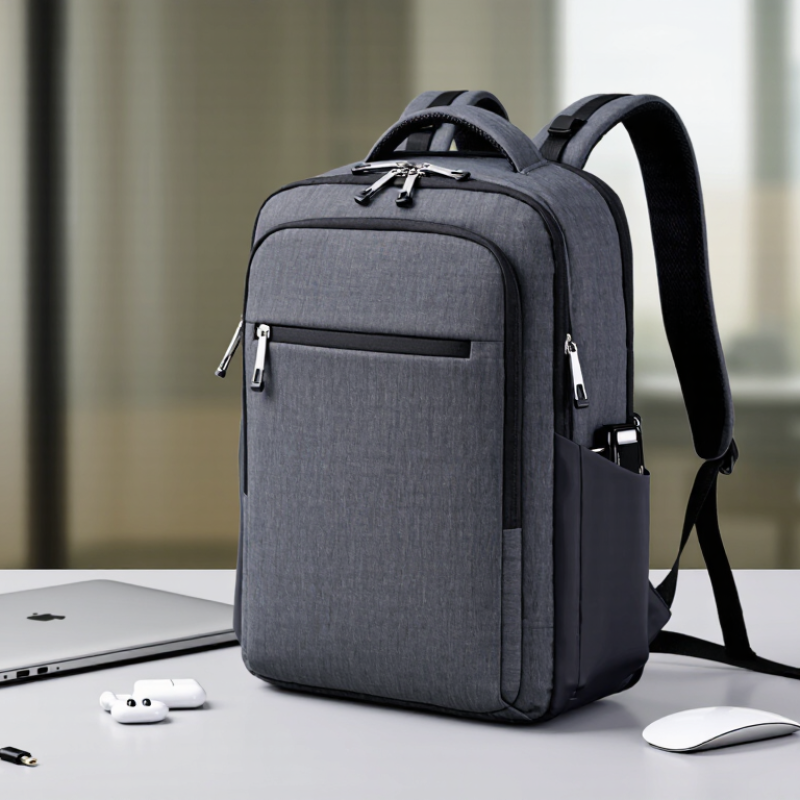
Why Choose Custom Laptop Backpacks for Your Business?

Understanding Custom Laptop Backpacks and Their Business Purpose

A custom laptop backpack is a bag designed around a company’s daily work needs, rather than simply a standard bag with a logo. It might have a padded sleeve sized for common devices, separate cable pockets, a document section, and adjustable straps. These details work best when they reflect how staff actually commute and carry equipment. A polished bag can still be uncomfortable. Fit comes first.

For a business, the purpose is to protect devices, support mobility, and create a consistent professional appearance. Employees who visit clients may prefer understated colors and quick-access pockets for chargers or access cards. Field teams may need reinforced bases and fabric that is easy to clean. Ask staff to test a sample with a laptop, charger, and notebook inside. A spec sheet will not reveal a catching zipper or cramped sleeve. Small trial, useful lesson.

Customization also affects durability and cost over time. Check stitching, padding, zipper quality, and material specifications instead of relying on appearance alone. Ask how the bag performs after repeated opening and ordinary commuting. One useful detail is often better than several decorative extras. A company logo should remain visible without taking space from practical features. Even careful planning can miss something; employee feedback after a few weeks may point to changes for the next order.

How Custom Backpacks Support Branding and Employee Visibility

Custom laptop backpacks turn everyday commutes into practical opportunities for brand visibility. A clean logo on the front pocket can appear in elevators, cafés, and conference rooms. The ASI 2023 Ad Impressions Study estimates that promotional bags generate about 1,940 impressions over their lifetime. That figure covers bags broadly, not laptop backpacks specifically, so treat it as an industry benchmark rather than a guarantee. Useful design matters. Employees are more likely to carry a comfortable bag with padded laptop protection, sturdy zippers, and pockets that keep chargers from tangling.

Visibility should feel natural, not forced. Choose a logo that remains readable from a few steps away, but avoid oversized graphics that make staff feel like walking billboards. Matching backpacks can help colleagues recognize one another at busy events or during off-site visits. Still, uniformity has limits. Some employees may prefer a different bag, and a branding plan should leave room for feedback.

Tips: Test a sample on a real commute. Check strap comfort, laptop fit, and logo readability in daylight. Ask employees what they would change; their answers may expose a detail the design team missed.

Why Choose Custom Laptop Backpacks for Your Business? - How Custom Backpacks Support Branding and Employee Visibility

Planning dimension Practical guideline Branding and visibility benefit What to verify
Laptop fit Choose a padded compartment sized for the devices employees actually use. Common laptop sizes include 13-inch, 14-inch, and 15.6-inch models; check the device’s physical dimensions, not only its screen size. A useful, well-fitting backpack is more likely to be carried regularly, keeping approved visual identity in circulation. Test the largest and smallest assigned devices, including protective cases.
Logo placement Consider a front panel or upper pocket for a logo. Keep the artwork clear of seams, zippers, pockets, and curved areas. A clearly positioned mark makes the organization easier to recognize at events, offices, and while commuting. Review a physical sample for logo size, contrast, alignment, and legibility at a typical viewing distance.
Decoration method Embroidery adds a stitched finish; screen printing or heat-transfer methods can suit some flat fabric panels. Suitability depends on fabric, artwork, and order requirements. A method matched to the bag and artwork can help maintain a consistent, professional appearance. Ask the supplier to confirm material compatibility, color matching, care instructions, and sample approval.
Color selection Select base and accent colors from the organization’s approved visual guidelines. High contrast between the mark and the fabric can improve legibility. Consistent colors help the backpacks look like part of a coordinated employee kit. Check colors on the actual fabric under indoor and outdoor lighting; printed color references may vary by material.
Employee visibility For teams travelling or attending events, consider a distinctive approved color, a visible logo, or reflective details where appropriate. Distinctive details can make colleagues easier to identify in shared settings. Reflective elements can improve visibility when illuminated in low-light conditions. Do not treat reflective trim as a substitute for required personal protective equipment or high-visibility clothing.
Comfort and carry Look for adjustable shoulder straps, a padded back panel, and a handle suited to the expected commute and load. Comfort supports everyday use, helping the custom design remain visible beyond the initial distribution. Have representative employees try a loaded sample and check strap adjustment and access to compartments.
Organization and access Match pockets and closures to work needs, such as carrying a charger, notebook, access card, or water bottle. A separate laptop compartment can help keep devices apart from other items. Practical features make the backpack useful for work travel, onboarding, and events. Confirm pocket dimensions, closure design, and any water-resistance claims with the supplier.
Durability and care Compare fabric, stitching, zippers, and care requirements against the expected frequency of use. Follow the manufacturer’s cleaning instructions. A backpack that holds up in regular use can maintain a consistent appearance over time. Review construction samples and written warranty terms; avoid assuming that a fabric is waterproof unless specified.
Ordering and consistency Approve artwork, colors, decoration position, and a production sample before placing a larger order. Keep approved specifications for future reorders. Documented specifications help keep employee kits visually consistent across departments and order batches. Confirm minimum order quantity, lead time, replacement availability, and final artwork proof.

Choosing Designs, Materials, and Protective Features

A custom laptop backpack should begin with the way employees actually travel: crowded trains, short walks in rain, and chargers packed beside notebooks. IDC reported 262.7 million worldwide PC shipments in 2024, covering desktops and notebooks. That broad market scale makes flexible sizing useful, but it does not tell a company which bag its staff need. Measure common laptop sizes, then leave room for a sleeve, power adapter, and a small water bottle. A suspended padded compartment can keep a device from striking the base when the bag is set down. Test zippers, seams, and padding with loaded bags, not empty samples. Small detail. A bulky pocket layout can still feel awkward on a commute.

Material choices shape both appearance and daily wear. Textile Exchange’s Materials Market Report 2024 estimated that recycled polyester represented about 12% of global polyester production in 2023. That makes recycled fabric a practical option to assess, though recycled content alone does not prove lower impact. Ask suppliers for fiber-content records and coating details. For frequent travel, compare abrasion resistance, water resistance, and fabric weight; a coated fabric may repel drizzle, but stitching and zipper openings can remain vulnerable. Custom colors and restrained embroidery help teams identify shared bags without adding unnecessary bulk. I would test the chosen fabric after repeated packing and wiping. Samples rarely tell the whole story.

Matching Backpack Options to Business Needs and Budget

Choosing custom laptop backpacks starts with how employees actually move through a workday. A field technician carrying tools needs reinforced stitching and easy-access pockets. A consultant moving between meetings may prefer a slim profile, padded laptop sleeve, and room for a charger and notebook. Check laptop dimensions, not just screen size, before selecting a compartment.

Small details matter. Adjustable straps, a luggage pass-through, and a water-resistant outer fabric can improve daily comfort and usefulness. Water-resistant does not mean waterproof, so avoid promising protection in heavy rain. A simple logo placement may suit a modest budget, while custom colors, extra pockets, and premium materials usually add cost. Ask suppliers for a sample and a clear quote that includes decoration and delivery.

Match spending to expected use. For a large team, a durable mid-range bag may offer better value than the cheapest option, especially when employees carry it every day. For occasional events, a simpler model may be enough. Test before ordering. Load a sample with a laptop, charger, and paperwork, then check its balance and zipper access. One easy mistake is choosing appearance before comfort; honestly, that can be hard to notice in a product photo.

Planning Customization, Production, and Distribution

Planning a custom laptop backpack begins with the person carrying it. Measure common laptop sizes, then allow room for a padded sleeve, charger, and water bottle. Choose fabric, lining, zippers, and stitching based on daily wear, not just appearance. The ASI 2023 Ad Impressions Study estimated that bags generate 1,940 lifetime impressions. That makes useful design and durable construction important to brand exposure. Still, a logo cannot rescue an uncomfortable strap. Request a physical sample and test its seams, zipper pulls, and fit before approving bulk production.

Build the production plan around clear specifications: color references, logo placement, materials, packaging, and acceptable tolerances. Approve a pre-production sample, then set inspection points for fabric, stitching, and finished dimensions. Leave time for corrections. That part is easy to underestimate. For distribution, confirm quantities by destination, carton labeling, delivery windows, and who receives each shipment. DHL’s 2024 E-Commerce Trends Report found that 81% of surveyed shoppers may abandon a purchase when their preferred delivery option is unavailable. While corporate orders differ, the finding highlights a practical lesson: delivery details affect the experience. A shared shipment tracker helps, though it will not fix an unrealistic schedule.

Why Choose Custom Laptop Backpacks for Your Business?

A planned production timeline helps businesses coordinate design, sampling, manufacturing, and delivery.

How to read this: Bars show the midpoint of illustrative planning ranges: specification and design (1–2 weeks), sampling (2–4), revisions (1–2), production (4–8), quality checks and packing (about 1), and distribution (1–4). Actual timing varies with order size, customization, supplier capacity, and shipping method; these are planning estimates, not industry-wide benchmarks.

FAQS

What makes a custom laptop backpack useful for a business?

It should protect devices and suit employees’ daily routines. A padded sleeve, cable pocket, and adjustable straps can help.

How can a company choose the right laptop compartment?

Measure common laptop dimensions, not just screen size. Leave room for padding and avoid a cramped fit.

What should employees test in a sample backpack?

Load it with a laptop, charger, and notebook. Check the strap comfort, zipper access, and balance. Small trial, useful lesson.

Which features suit employees who travel between meetings?

A slim profile, quick-access pockets, and a luggage pass-through may help. Comfort still matters more than a polished look.

What should field teams look for?

Reinforced stitching, an easy-to-clean fabric, and a sturdy base can suit daily use. Needs vary, so staff feedback matters.

Does water-resistant fabric keep a backpack dry in heavy rain?

No. Water-resistant fabric can help with light moisture, but it does not guarantee protection in heavy rain.

How can a business manage customization costs?

Simple logo placement may cost less than custom colors or extra pockets. Request a quote covering decoration and delivery.

What checks help before bulk production?

Approve a physical sample and review its seams, dimensions, materials, and logo placement. Leave time for corrections. That part is easy to underestimate.

How can a company make distribution smoother?

Confirm quantities, destination labels, delivery windows, and receiving contacts. A shared shipment tracker helps, though it cannot fix an unrealistic schedule.

Conclusion

Custom Laptop Backpacks give businesses a practical way to protect employees’ devices while supporting everyday work and travel. Designed around a company’s needs, they can combine padded laptop compartments, useful storage, comfortable straps, and durable materials. Thoughtful color and customization choices can also make employees more visible as part of a team and help create a consistent, professional appearance.

The right option depends on how the backpacks will be used, the level of protection required, and the available budget. Businesses can compare sizes, fabrics, features, and customization methods before confirming quantities and production schedules. Planning distribution in advance helps ensure that each backpack reaches the intended employee on time and is suitable for daily use.

Callen

Callen

Callen is a professional marketing specialist with a deep understanding of the company’s products, customers, and industry landscape. With a strong combination of strategic insight, market awareness, and practical experience, Callen regularly creates and updates the company’s professional blog,......