
0%

China’s organic textile sector has grown from small workshops into a serious sourcing destination. This guide examines the China Top 10 Organic Cotton Tote Bags Suppliers, focusing on product quality, material traceability, production capacity, and communication standards.

Organic Cotton Tote Bags may look simple. Yet, every bag reflects several decisions. A supplier must manage cotton certification, fabric weight, stitching density, dye safety, and packaging. In practice, buyers should inspect product samples carefully. A soft handle can hide weak seams. A bright print may fade after several washes. These details matter more than polished factory photos.

La Rhea Pepper, a longtime organic textile advocate, said, “Organic agriculture is a production system that sustains the health of soils, ecosystems and people.” Her statement offers a useful standard for evaluating suppliers. Organic cotton should support responsible farming, not merely serve as a marketing label.

This overview considers suppliers that serve promotional brands, retailers, event organizers, and sustainable businesses. It reviews certifications, minimum order quantities, customization options, lead times, and export experience. It also considers whether factories explain their sourcing clearly. Some supplier pages remain incomplete. That is worth remembering.

No ranking can replace direct verification. Buyers should request current certificates, physical samples, factory details, and written production terms. A supplier may appear competitive, but inconsistent sizing can create expensive problems. The strongest choices combine reliable workmanship with transparent evidence. China offers many capable manufacturers, though careful comparison remains essential.
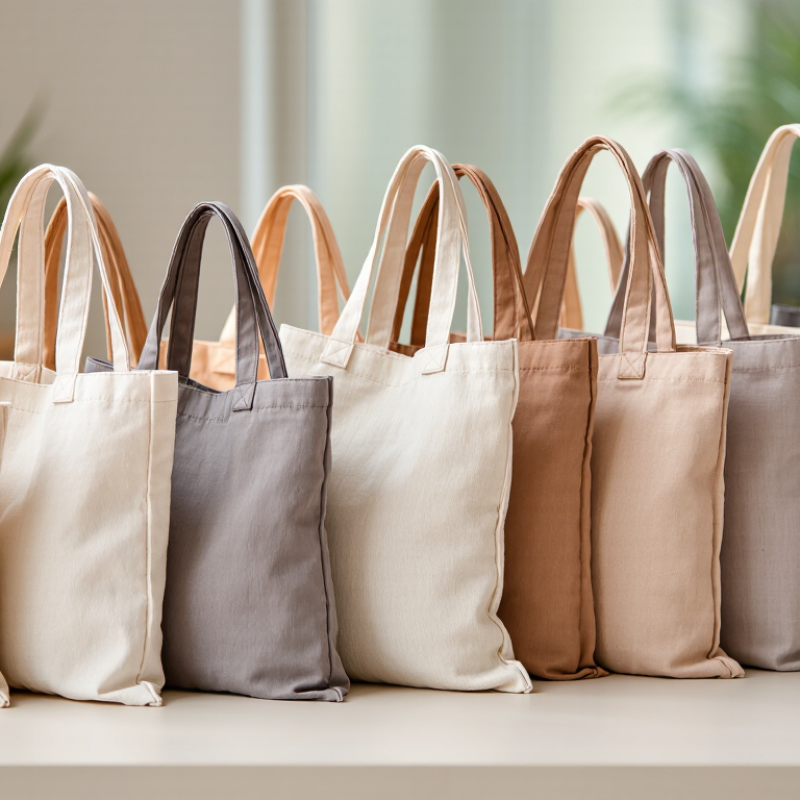
China Top 10 Organic Cotton Tote Bags Suppliers?

What Are Organic Cotton Tote Bags?

Organic cotton tote bags are reusable carry bags made from cotton grown under recognized organic farming standards. These standards generally restrict synthetic pesticides, fertilizers, and genetically modified seeds. Certification matters. It supports traceability from farm to finished fabric.

Unlike ordinary cotton bags, the word organic describes the fiber’s farming method, not automatically the entire product. Dyes, thread, handles, coatings, and printing still need separate review. A responsible supplier should provide current certification documents and explain where cutting and sewing occur.

Ask about fabric weight too. A 10-ounce canvas bag feels firmer than a lightweight 5-ounce version. Reinforced handles, boxed corners, and neat stitching help the bag carry books or groceries without twisting.

In practical use, organic cotton totes feel breathable and slightly textured. They can be folded into a drawer, washed carefully, and used repeatedly. Yet “eco-friendly” is not a magic label. Frequent washing consumes water, and a poorly made bag may be discarded early. Durability often matters more than a soft marketing claim. Buyers should inspect shrinkage, colorfastness, handle length, and load testing before placing large orders. Some bags still contain blended fibers or plastic packaging, which weakens the environmental story. Good sourcing requires evidence, not assumptions.

How to Evaluate Chinese Organic Cotton Tote Bag Suppliers

Evaluating Chinese organic cotton tote bag suppliers requires more than comparing factory prices. Request current organic certification documents, such as GOTS or OCS certificates. Check the certificate holder, factory address, product scope, and expiry date. Ask for transaction certificates covering the actual cotton used in your order. Do not rely on a certificate image alone. Confirm the information through the issuing organization when possible.

Study physical samples before discussing large volumes. Measure fabric weight, bag dimensions, handle length, stitching density, and seam strength. Test shrinkage after washing. Check colorfastness and printed ink performance. A polished website proves little. Ask for factory audit reports, quality-control procedures, production capacity, and recent export experience. During a video inspection, look for organized fabric storage and clear batch labels. Small details reveal process discipline.

Pricing should be reviewed beside minimum order quantities, tooling fees, packaging, lead times, and shipping terms. Request a written inspection standard with acceptable defect limits. A pilot order can expose weak stitching or uneven printing before a larger commitment. I once underestimated handle reinforcement; the sample looked strong, but heavy loading exposed loose seams. That mistake changed my evaluation checklist. Reliable suppliers explain problems openly, provide corrective actions, and communicate delays early. Also confirm that packaging, labeling, chemical use, and product testing meet the destination market’s requirements.

China’s Top 10 Organic Cotton Tote Bag Suppliers

China’s top 10 organic cotton tote bag suppliers are often judged by more than price. A dependable supplier should provide organic certification, fabric traceability, and stable production records. The strongest factories usually offer cutting, stitching, printing, inspection, and packing under one roof. This reduces delays and handling risks.

The ten suppliers in a serious shortlist may serve different needs. Some produce lightweight bags for retail counters. Others make heavy canvas totes with reinforced handles. Several support custom sizes, inner pockets, woven labels, or water-based printing. Check fabric weight carefully. A 140 GSM bag feels very different from a 300 GSM bag. Ask for pre-production samples before approving bulk orders. My experience is that photos can hide weak seams and uneven printing. Even experienced buyers sometimes overlook handle stress testing.

Tips: Request current organic certificates and verify their validity. Confirm whether certification covers the fabric or the finished product. Ask for a written inspection standard, including stitching strength, dimensions, color tolerance, and packaging. Discuss minimum order quantities early. A low quoted price may exclude printing plates, sampling, freight, or export packing. Also request production photos with visible dates. They are not perfect proof, but they reveal useful details.

China Top 10 Organic Cotton Tote Bag Suppliers

Organic-fiber content thresholds used by major textile certification schemes provide a neutral way to compare supplier qualification requirements without displaying company or brand data.

GOTS “Made with Organic” requires at least 70% certified organic fibers, while the GOTS “Organic” label requires at least 95%. OCS Blended covers products containing 5–95% organic material, and OCS 100 requires at least 95% organic material.

Supplier Comparison: Materials, Certifications, and Customization

When comparing China’s top ten organic cotton tote bag suppliers, inspect materials before judging prices. Ask for the cotton’s origin, fabric weight, weave, and dyeing process. Organic cotton should have recognized certification, such as GOTS or OCS, supported by valid documents and transaction records. A logo alone proves little. Request current certificates and verify the certification scope.

Customization separates capable suppliers from simple trading contacts. Compare bag dimensions, handle length, stitching density, inner pockets, closures, printing methods, and packaging. Sample testing matters. Measure shrinkage after washing, check colorfastness with a damp cloth, and pull the handles firmly. Ask for the minimum order quantity, sample charge, production lead time, and inspection procedure. My early comparisons focused too heavily on fabric weight. That was a mistake. Stronger fabric does not always mean better comfort or durability.

Tips: Keep one approved sample as a reference. Record its measurements and color under natural light. Request a pre-production sample before mass manufacturing. Discuss acceptable defects in writing, including loose threads, uneven printing, and seam gaps. Some suppliers may promise flexible customization but limit small orders or complex artwork. Confirm these details before comparing quotations. A supplier with clear answers, traceable documents, and consistent samples usually deserves closer attention. Still, no comparison is perfect. Shipping delays, seasonal capacity, and material availability can change the final result.

China Top 10 Organic Cotton Tote Bags Suppliers? - Supplier Comparison: Materials, Certifications, and Customization

Supplier Profile Main Material Options Fabric Weight Certification Documents Commonly Available Customization Capability Typical MOQ Typical Lead Time Best-Suited Buyer
Supplier Profile 01 100% organic cotton canvas; natural or dyed finish 8–12 oz / 270–400 gsm GOTS or OCS transaction certificate when applicable; OEKO-TEX Standard 100 may be available for finished goods Screen printing, embroidery, woven labels, inner pockets, gussets, custom handles 500–1,000 pcs 20–35 days Retail and promotional programs requiring standard organic canvas
Supplier Profile 02 Organic cotton twill; recycled cotton blends available 6–10 oz / 200–340 gsm OCS Blended or OCS 100 documentation may be available; recycled content claims require separate evidence Two-tone fabrics, contrast handles, heat-transfer graphics, barcode labels, retail packaging 1,000–2,000 pcs 25–40 days Fashion, lifestyle, and event merchandise buyers
Supplier Profile 03 Heavy organic cotton canvas; waxed or water-repellent finishes 12–18 oz / 400–610 gsm GOTS scope and transaction records should be checked; finish-specific chemical testing may be requested Reinforced stitching, metal hardware, leather alternatives, padded bases, custom silhouettes 300–800 pcs 30–45 days Premium retail, workwear, and durable everyday bags
Supplier Profile 04 Organic cotton muslin; lightweight canvas and calico 3–7 oz / 100–240 gsm OCS documentation may be available; OEKO-TEX testing is commonly requested for printed products Simple one-color printing, drawstrings, custom sizes, blank bags, low-ink packaging 1,000–3,000 pcs 15–30 days Festivals, conferences, bookstores, and high-volume campaigns
Supplier Profile 05 Organic cotton canvas with recycled polyester lining options 8–14 oz / 270–475 gsm GOTS or OCS for organic cotton; GRS may apply only to verified recycled content; OEKO-TEX may cover components Zippers, lining, laptop sleeves, pockets, adjustable straps, digital printing 500–1,500 pcs 30–45 days Corporate gifting and functional commuter products
Supplier Profile 06 Organic cotton canvas; undyed, low-impact dyed, or pigment-dyed options 8–16 oz / 270–540 gsm GOTS certification may cover processing and dyeing; chemical test reports should be requested for each colorway Full-color printing, custom dye matching, embroidery, hangtags, and recycled packaging 1,000–2,000 pcs 25–40 days Sustainability-focused brands and institutional buyers
Supplier Profile 07 Organic cotton canvas with hemp or linen blend options 7–12 oz / 235–400 gsm OCS or GOTS may apply to organic cotton; blended-fiber percentages must be documented separately Natural texture selection, custom weaving, screen printing, embroidery, and paper labels 500–1,000 pcs 30–50 days Eco-conscious retail and natural-material product lines
Supplier Profile 08 Organic cotton canvas; recycled cotton and recycled polyester alternatives 6–14 oz / 200–475 gsm GOTS, OCS, or GRS may apply according to fiber content and certified supply chain scope Custom panels, color blocking, woven patches, branded lining, and multiple handle lengths 1,000–3,000 pcs 30–45 days Large promotional orders and multi-material collections
Supplier Profile 09 Organic cotton canvas; recycled or organic cotton lining options 9–15 oz / 305–510 gsm GOTS or OCS for organic fiber; social-compliance audit reports may be supplied separately Structured construction, magnetic closures, pockets, piping, premium embroidery, and gift boxes 300–1,000 pcs 35–55 days Premium gift, hospitality, and boutique retail programs
Supplier Profile 10 Organic cotton canvas; undyed and recycled-material options 5–12 oz / 170–400 gsm OCS or GOTS may be available; OEKO-TEX Standard 100 testing can support product-safety requirements Small-batch sampling, logo printing, custom dimensions, labels, and basic packaging 200–800 pcs 20–35 days Startups, test orders, small retailers, and seasonal campaigns

Note: The profiles above are anonymized market-comparison categories rather than named companies. MOQ, pricing, lead time, material composition, and certification availability vary by order specification. Buyers should request current certificates, transaction certificates, fiber-content evidence, laboratory test reports, and a pre-production sample before placing an order.

How to Choose the Right Supplier for Your Business

Choosing the right organic cotton tote bag supplier requires more than comparing prices. Textile Exchange’s 2023 Organic Cotton Market Report recorded 342,265 metric tonnes of organic cotton production in 2021/22. That represented only about 1.4% of global cotton output. Supply remains limited.

Ask for current organic certification, transaction certificates, and traceability records. A certificate alone is not enough. Verify the cotton’s origin, spinning location, dyeing process, and final sewing factory. The Global Organic Textile Standard also requires controlled processing and documented supply-chain practices. Check whether the certificate covers the exact facility producing your bags.

Request physical samples before placing a large order. Examine the fabric weight, handle stitching, seam strength, printing clarity, and shrinkage after washing. A practical test is carrying five kilograms for one hour. The handles should not twist or loosen. Confirm minimum order quantity, production lead time, replacement terms, and inspection procedures in writing.

Ask for independent testing of dyes, heavy metals, and tensile strength when your market requires it. Supplier audits can reveal useful facts, but they may miss daily quality problems. I have seen attractive samples hide uneven stitching in bulk production. That risk deserves a smaller trial order, even when the unit price looks higher. A reliable supplier should answer clearly, provide consistent documents, and accept reasonable quality checks.

FAQS

Which documents should I request from an organic cotton tote bag supplier?

Request current organic certification, transaction records, and traceability documents. Check the certificate holder, factory address, product scope, and expiry date. A certificate image alone is weak evidence.

How can I verify whether the certificate is relevant?

Confirm the certificate through the issuing organization when possible. Ensure it covers the exact factory producing your bags. Check the cotton, spinning, dyeing, and sewing locations.

What should I inspect in physical samples?

Measure fabric weight, bag dimensions, handle length, and stitching density. Check seam strength, printing clarity, and loose threads. Wash one sample to measure shrinkage. Small details matter.

How can I test tote bag durability?

Carry five kilograms for one hour. Watch whether the handles twist, loosen, or pull the seams open. Pull the handles firmly before approving the sample. My earlier test was too gentle.

Which customization details require written confirmation?

Confirm dimensions, handles, pockets, closures, printing methods, and packaging. Ask about minimum order quantities, sample fees, and artwork limits. Complex artwork may require larger orders.

How should I compare supplier quotations?

Compare prices with minimum quantities, tooling fees, packaging, lead times, and shipping terms. A low unit price may hide higher total costs. Ask for every charge in writing.

What quality controls should I request before mass production?

Keep one approved sample as the reference standard. Request a pre-production sample and written defect limits. Include seam gaps, uneven printing, loose threads, and color differences.

Can factory audits guarantee consistent bulk quality?

No. Audits provide useful evidence, but they may miss daily production problems. Inspect storage areas, batch labels, and quality-control records by video. A trial order remains sensible.

Conclusion

This guide explains what Organic Cotton Tote Bags are and why they are valued for their natural fibers, reusable design, durability, and reduced environmental impact. It also outlines the key factors businesses should consider when evaluating Chinese suppliers, including production capacity, fabric quality, stitching standards, communication, lead times, pricing, and order flexibility.

The article presents a practical comparison of ten leading supplier profiles without focusing on brand names, highlighting differences in materials, certifications, printing methods, packaging, and customization options. It concludes with a clear framework for choosing the right supplier based on business size, target market, budget, required compliance documents, design needs, and expected order volume. This approach helps buyers make informed decisions and build reliable, long-term sourcing partnerships for customized Organic Cotton Tote Bags.

Callen

Callen

Callen is a professional marketing specialist with a deep understanding of the company’s products, customers, and industry landscape. With a strong combination of strategic insight, market awareness, and practical experience, Callen regularly creates and updates the company’s professional blog,......