
China has become a major sourcing base for brands seeking scalable, customizable bag production. Its supplier network covers handbags, backpacks, tote bags, luggage, and technical cases. This range supports both emerging labels and established retail programs.
Market data explains the opportunity. Grand View Research valued the global handbags market at approximately USD 78.5 billion in 2023. It also projects continued growth through 2030, supported by changing lifestyles, travel demand, and online retail. The Business Research Company reports similar expansion across the broader bags and luggage sector. These figures indicate demand, but they do not guarantee a successful supplier relationship.
That part requires careful evaluation.
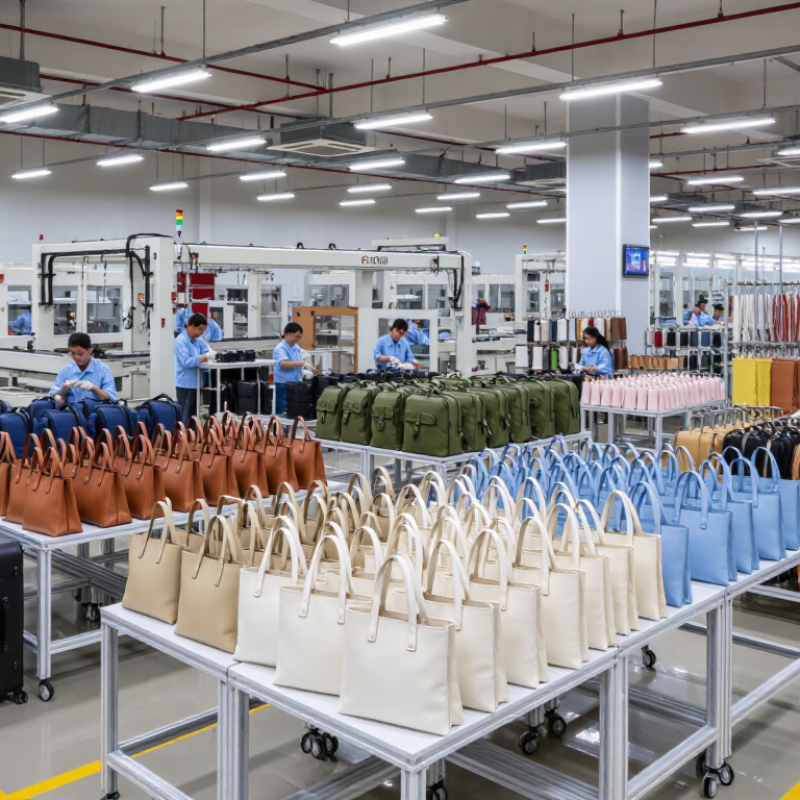
China’s strongest factories often combine material sourcing, pattern development, sampling, cutting, stitching, finishing, and quality inspection under one production system. In practical terms, buyers should examine leather or fabric certificates, zipper performance, seam strength, color consistency, packaging, and factory audit records. Private Label Bag Manufacturing is not simply logo application. It involves translating a brand concept into a repeatable product with controlled costs and stable quality.
Experienced buyers usually compare minimum order quantities, lead times, prototype fees, production capacity, and export experience. They also check whether a manufacturer can support recycled fabrics, water-based coatings, or traceable materials. Textile Exchange’s Preferred Fiber and Materials Market Report highlights the growing importance of verified material choices across global supply chains.
Some supplier rankings look impressive, yet rankings alone can mislead. Factory visits, independent inspections, and sample testing remain valuable. A reliable Chinese bag manufacturer should communicate clearly, document specifications, and acknowledge limitations before production begins. That honesty may matter more than a polished catalog.
Private-label bag demand is gaining clear momentum in Europe. PLMA reported a 38.3% private-label share across European retail in 2023. This figure signals strong buyer confidence in retailer-owned products. It also raises expectations for quality, traceability, and delivery consistency.
China remains a practical sourcing base for global buyers. Experienced manufacturers can develop tote bags, travel bags, cosmetic cases, and backpacks from approved materials. Buyers should request physical samples, material specifications, stitching details, and packaging plans before production.
Factory audits can verify equipment, worker practices, inspection procedures, and production capacity. These checks matter when one shipment contains thousands of units.
Small details often decide repeat orders. Zipper strength, handle reinforcement, lining thickness, and color consistency deserve written standards.
Independent inspections can check dimensions and defects before shipment. Compliance documents must match the destination market and product materials. A low quotation may look attractive, but weak sampling can create costly rework. That assumption can fail.
Private-label projects also need realistic timelines. Sampling may require several revisions, especially when recycled fabrics or custom hardware are involved. Buyers should confirm minimum order quantities, payment terms, carton markings, and permitted tolerances early.
Some suppliers communicate well during development but respond slowly after approval. Regular production updates reduce that risk, although they cannot replace on-site or third-party inspection. Experience helps, but careful verification remains essential.
Private-label bags represented 38.3% of European retail demand in 2023. Buyers now expect quality, traceability, and reliable delivery.
China offers experienced manufacturers for totes, travel bags, cosmetic cases, and backpacks. Many factories support custom materials, sizes, closures, labels, and packaging.
Request physical samples, material specifications, stitching details, inspection records, and packaging plans. One sample is not enough.
Define zipper strength, handle reinforcement, lining thickness, dimensions, color tolerance, and acceptable defects. Small details can decide repeat orders.
Factory audits can review equipment, worker practices, inspection systems, and production capacity. Third-party inspections can verify goods before shipment.
Ask for reports covering strength, colorfastness, chemical limits, and packaging quality. Documents should match the destination market and materials.
Compare samples, specifications, production methods, and inspection plans instead of comparing prices alone. A cheap quote can become expensive rework.
Confirm minimum order quantities, payment terms, carton markings, delivery dates, and permitted tolerances. Write everything down.
Sampling may need several revisions, especially with recycled fabrics or custom hardware. Timelines should include testing and corrections.
Forecasts show useful direction, but definitions and assumptions can differ. Budgets should allow uncertainty, slow sales, and imperfect estimates.
Private Label Bag Manufacturing is expanding as retailers and emerging labels seek flexible, cost-efficient products with distinctive designs. European buyers represented 38.3% of private-label bag demand in 2023, while the global bag market was valued at approximately $64.8 billion in 2022 and is projected to grow at a 5.8% CAGR through 2030. China remains a major sourcing destination, supported by specialized OEM and ODM clusters and extensive trade activity under HS code 4202.
Successful supplier selection requires more than comparing unit prices. Buyers should evaluate minimum order quantities, sample and production lead times, defect rates, factory audit results, production capacity, and communication reliability. Compliance planning should cover REACH, CPSIA where applicable, material safety testing, labeling, packaging, and documentation. Finally, importers should compare Incoterms, freight, duties, inspection costs, and other expenses to calculate the true landed price and build a reliable, scalable supply chain.