
Choosing Promotional Drawstring Bags for your business is more than selecting a color and adding a logo. The right bag should fit your audience, campaign, and budget. A lightweight polyester bag may work for a campus event, while a sturdier cotton option can suit a retail giveaway. Think about what recipients will carry: a water bottle, gym clothes, or a few trade-show samples. Small details matter. Strap comfort, stitching, and print contrast can affect whether a bag gets used again.
Marketing expert Seth Godin wrote, “Marketing is no longer about the stuff that you make, but about the stories you tell.” That idea applies to promotional bags: the item should support a clear message, not just display a mark. Still, a good story cannot rescue poor construction. Ask suppliers about fabric weight, print methods, sample approval, and production timelines. Compare actual specifications, not just product photos. A glossy image can hide thin material.
This guide outlines practical ways to assess design, durability, customization, and cost before placing an order. It also considers how your audience will use the bags after the event. That part is easy to overlook. No single style suits every campaign, and choosing a popular option without checking its fit can waste budget. Use the questions ahead to make a more informed choice—and leave room to review your assumptions.
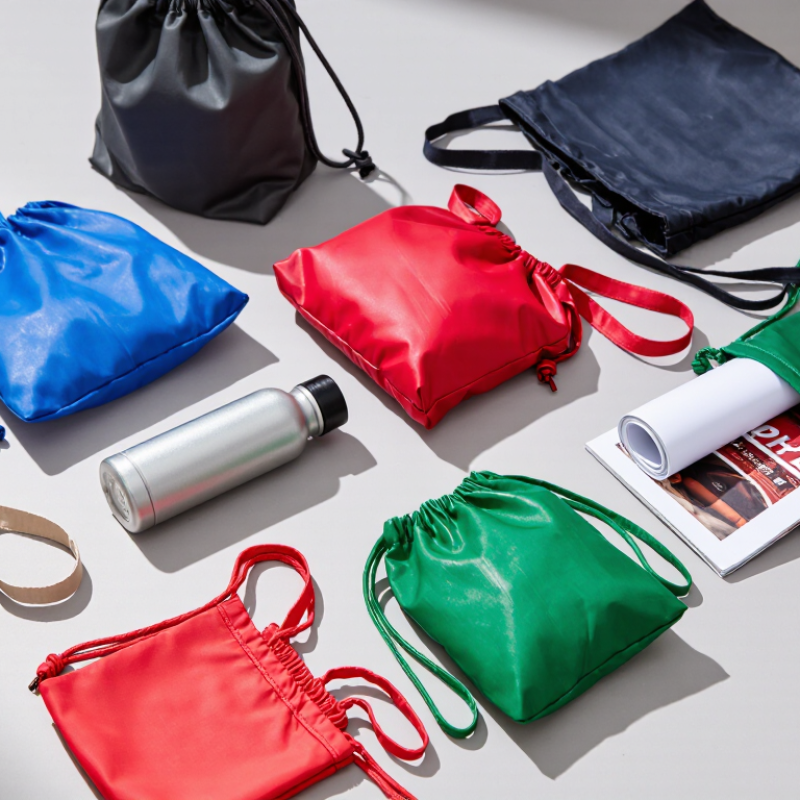
Choose the bag by deciding what you want people to do after receiving it. A trade-show team might aim to start conversations; a retailer may want customers to reuse bags on shopping trips. ASI’s 2023 Ad Impressions Study found that 85% of recipients remembered the advertiser on a promotional product, and 83% liked receiving one. Those figures support visibility, but they do not guarantee sales. Define a measurable goal, such as event follow-ups or repeat visits, before setting quantity and budget.
Then picture the recipient’s actual day. A commuter carrying a laptop may need a reinforced base and wider straps; a festival attendee may prefer a light bag that folds into a pocket. Keep it practical. Ask how often the audience will use it, what they will carry, and where your message will be seen. A detailed design can look crisp on screen yet become hard to read when printed small. Request a sample and check the cord, seams, and print in ordinary daylight. That is not enough by itself. I would also question assumptions about audience preferences: a quick survey or event feedback can reveal that the “ideal” bag is simply too bulky.
Set a measurable goal, such as event follow-ups or repeat store visits. A bag can build visibility, but it cannot guarantee sales.
Picture where people will carry it and what they will pack. Commuters may need wide straps and a reinforced base; festival guests may prefer a lightweight bag that folds into a pocket. Ask for feedback. Your first assumption may be wrong.
Lightweight polyester suits event handouts and packs down small. Cotton or canvas feels sturdier for books and groceries, but weighs more. There is no perfect fabric.
Ask about fabric weight, recycled content, and care instructions. Polyester represented an estimated 57% of global fiber production in 2023, but that figure does not prove a specific bag will last. Rub a sample and inspect its seams.
Check the stitching near the cord openings and pull the cord gently. Load the bag with books or a water bottle. Test it loaded. A lining may add structure, but can affect breathability and recyclability.
Screen printing can suit bold artwork with few colors. Heat transfer can show finer details, while embroidery adds texture but may cost more. Check how the design looks on the actual fabric.
Send each supplier the same artwork and quantity. Compare setup, printing, packing, shipping, sample costs, and delivery dates. Small details matter. A low unit price may hide extra fees.
A digital proof cannot show how the fabric drapes or the ink feels. Check the print in ordinary daylight, and test cord length and comfort. I once overlooked cord length; the bags felt awkward to carry. My review process needed more care.
Choosing the right Promotional Drawstring Bags starts with a clear purpose and a good understanding of the people who will receive them. Consider whether the bags are intended for events, customer giveaways, employee use, or everyday errands, then select a material and construction that suit the expected use, durability, and budget. Lightweight fabrics may work well for short-term promotions, while sturdier options can help the bag remain useful for longer.
Next, match the bag’s size, closures, pockets, and design to its intended contents and audience. Compare printing and decoration methods, supplier capabilities, pricing, and production timelines before making a decision. Review sustainability considerations, request samples to assess quality and appearance, and confirm minimum order quantities and delivery details. Balancing usefulness, visual appeal, cost, and production quality can help you choose bags that represent your business effectively and provide lasting value to recipients.