
0%

Kids Printed Backpacks turn an everyday school item into a personal choice. But a bright dinosaur or floral print is only the first test. The straps must sit comfortably, the fabric should handle daily wear, and the bag should fit the child’s frame. Small details matter: a zipper that catches, a slippery strap, or a water bottle pocket that is too shallow can quickly frustrate a student. Looks matter. Fit matters more.

Industry context helps explain the crowded choice. Grand View Research’s 2023 backpack market report estimated the global backpack market at about US$19.4 billion in 2022. That figure covers backpacks broadly, not children’s printed styles alone, so it should not be mistaken for a kids’ market estimate. For practical guidance, the American Occupational Therapy Association has advised keeping a child’s loaded backpack within 10% of body weight. Occupational therapist Dr. Karen Jacobs has expressed the rule plainly: “A backpack should weigh no more than 10 percent of the child’s body weight.” Check the latest AOTA guidance, since recommendations and individual needs can vary.

These seven tips focus on comfort, construction, capacity, visibility, and easy care. They also consider whether a print stays appealing after repeated use. A child may love a vivid pattern today and tire of it by spring. That is worth reflecting on. The right choice balances the child’s taste with a parent’s practical checks, rather than treating either one as the whole answer.
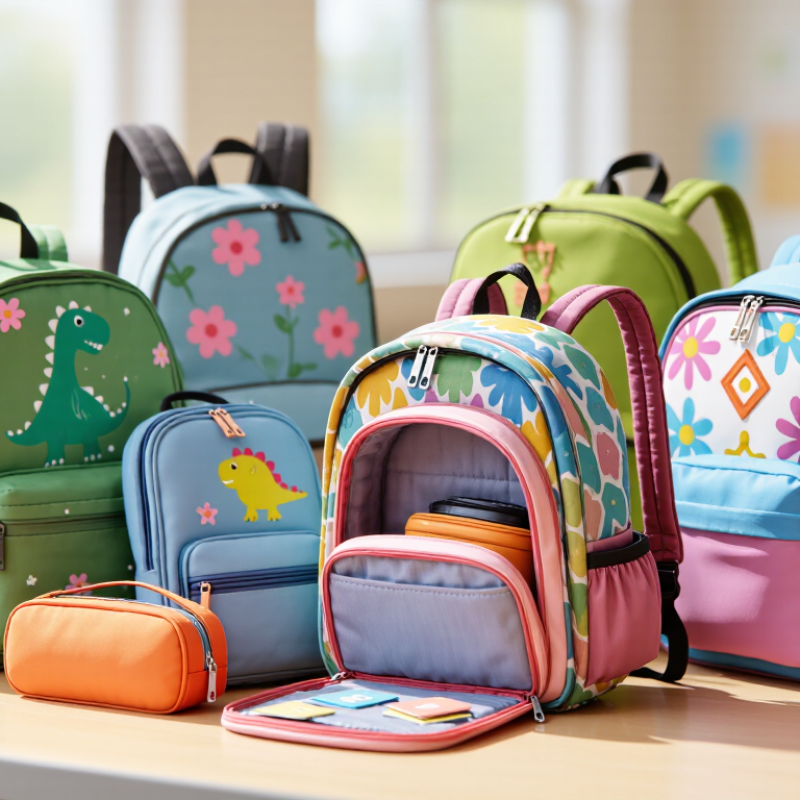
7 Tips for Choosing Kids Printed Backpacks

Identify Your Child’s Everyday Backpack Needs

A printed backpack should fit your child’s real school day, not just look appealing on a shelf. List what they carry: a tablet, two workbooks, a lunch box, a water bottle, or sports clothes. Then check whether those items fit without bulging the bag or crowding the main compartment. Small details matter. A side pocket that holds their bottle upright can prevent damp worksheets.

Consider the daily route, too. A child walking several blocks may benefit from a lighter bag and padded, adjustable shoulder straps. For weight, the American Occupational Therapy Association’s backpack-safety guidance recommends keeping a loaded backpack at or below 10% of a child’s body weight. Treat this as a practical screening target, not a promise of comfort; fit and the child’s own experience matter. Have them try the loaded bag, then watch whether it pulls their shoulders backward or hangs below the waist.

Choose pockets around habits, not hypothetical organization. If your child often loses pencils, a simple front pocket may help; too many compartments can become clutter. Check the zipper with small hands and feel the fabric at stress points. I would not size up just for next year. Extra space can tempt children to carry more, and I have misjudged that trade-off myself. Patterns come later.

Check the Backpack’s Fit, Weight, and Support

A printed backpack can look perfect on a screen and still sit awkwardly on a child’s back. Check the fit with the bag lightly loaded. The bottom should rest near the waist, not hang far below it. Shoulder straps should sit flat without digging into the neck. Adjust both straps evenly, then ask your child to raise their arms and walk a few steps. A little shifting is normal. Red marks or frequent shoulder shrugging are not.

Weight matters, too. Choose a lightweight bag before adding books, a lunch container, and a water bottle. Pack heavier items close to the back panel, where they are less likely to pull the child backward. Padded shoulder straps and a firm, comfortable back panel can improve support, but padding alone cannot fix a poor fit. Check that the straps stay adjusted during ordinary use. Children grow quickly, and I have sometimes trusted a “roomy” bag too much; extra space can invite extra clutter. Recheck the fit every few months, especially after a growth spurt. Comfort is easy to overlook in a shop. Test it with real school items instead.

7 Tips for Choosing Kids’ Printed Backpacks: Check Fit, Weight & Support

A practical guide to keeping a child’s backpack load within commonly recommended limits.

How to use this chart: A commonly cited guideline is to keep a child’s backpack around 10–15% of their body weight; recommendations can vary. Choose a pack that sits close to the back, rests comfortably near the waist, and has two adjustable, padded shoulder straps. Adjust the straps so the pack does not hang low, and remove items that are not needed.

Assess Materials, Construction, and Safety Features

A printed backpack faces more than a quick walk to school. It may be dragged across a classroom floor, squeezed under a desk, and caught in a sudden shower. Check the fabric for a tight, even weave, then look for clear care instructions. Feel the lining, too; thin material can tear around books and pencil cases. Feel the fabric.

Inspect the seams where the shoulder straps meet the bag. Several neat rows of stitching are usually more reassuring than a single loose line. Gently pull the straps and open each zipper to see whether they move smoothly. Rounded zipper pulls are easier for small hands to grip. Don’t judge durability by appearance alone; bright prints can hide weak stitching, and I’ve missed that detail when shopping in a hurry.

For comfort and safety, choose adjustable straps that sit flat and don’t dig into the shoulders. A padded back can help when the bag holds heavier school items, though fit matters more than extra padding. Reflective details may make a child easier to notice in dim light, but they don’t replace adult supervision near traffic. Check for loose threads, sharp edges, or small decorative parts that could come away. One check is not enough; inspect the bag again after regular use and washing.

Choose a Print Your Child Will Enjoy

Tip: Let your child help choose the print. A backpack may be used every school day, so their interest matters. Ask what they like: tiny dinosaurs, blue stars, or a bold geometric pattern. Give two or three suitable options, rather than an overwhelming wall of choices. This keeps the decision manageable while giving them a real say.

The National Retail Federation’s 2024 back-to-school survey found that families with children in kindergarten through grade 12 planned to spend an average of $874.68 on seasonal supplies and clothing. That figure covers many items, not backpacks alone, but it shows why a bag deserves careful thought. Check the print under natural light, and look for clear stitching around seams and straps. A favorite design can encourage daily use; it cannot make a poorly made bag durable.

Tip: Think beyond this year. Children’s tastes can change quickly, and a character or trend they adore today may feel less appealing by spring. Ask whether they would still enjoy the colors or pattern without a popular theme. I would not treat that question as a guarantee; kids surprise us. If possible, choose a print they like and pair it with adjustable straps, smooth zippers, and a washable surface. Let them carry a few books around the store, too. Comfort is easy to overlook when a design catches their eye.

7 Tips for Choosing Kids Printed Backpacks - Choose a Print Your Child Will Enjoy

Tip What to Consider Why It Matters Example
1. Let your child help choose Ask which colors, animals, patterns, or themes they like. A child is more likely to enjoy and use a design they helped select. Offer a choice between a space print and a nature print.
2. Match the print to their age and interests Consider whether their favorite characters, hobbies, or colors may change soon. A flexible design can stay appealing as tastes develop. A geometric pattern or favorite animal may suit a child who outgrows a specific theme.
3. Check that the print is easy to see Look for clear contrast between the pattern and the backpack’s background color. A distinct design is easier to recognize among similar bags. Bright shapes on a darker background can be easier to spot than a low-contrast print.
4. Consider everyday wear Check the care instructions and whether the fabric can be wiped clean or washed as directed. Backpacks can collect dirt from floors, playgrounds, and daily use. Choose a practical fabric and follow its label rather than assuming every bag is machine-washable.
5. Look closely at print placement Check that important parts of the design are not hidden by pockets, seams, or straps. The finished bag may look different from a flat pattern preview. A large central motif should remain visible when the front pocket is closed.
6. Balance style with practical features Check the size, padded straps, compartments, closures, and any reflective details. A fun print should not distract from fit, comfort, or everyday function. Compare the bag’s dimensions with your child’s needs and typical school supplies.
7. Think about visibility and personalization Consider a distinctive color or pattern, and add a name label inside if appropriate. A recognizable bag can be easier to identify; an interior label keeps personal details less visible. Use a unique print and place contact information on an inside tag, not prominently on the exterior.

Compare Storage, Cleaning, and Long-Term Durability

When comparing kids’ printed backpacks, look past the artwork and check the storage layout. A lunch container should sit flat, while a folder should slide in without bending its corners. Check whether side pockets hold a child-sized water bottle securely. Small details matter. A crowded main compartment can make a cheerful bag frustrating by midweek.

Cleaning needs vary with the fabric and print finish. Read the care label before washing; coated fabrics may do better with a damp cloth than a machine cycle. Check whether crumbs collect in deep seams or narrow pocket corners. A light interior lining makes spills easier to spot, though it may show stains sooner. That trade-off is real.

For long-term durability, inspect stress points rather than judging fabric by thickness alone. Look for even stitching around straps, reinforced seams, and zippers that move smoothly without snagging. Adjustable straps can accommodate growth, but an oversized bag may strain small shoulders. Lift it empty, then packed with books; the difference can be surprising. No bag stays perfect. Compare fabric weight, repair options, and cleaning instructions before choosing.

FAQS

Where should a child’s backpack sit?

Its bottom should rest near the waist, not hang far below it. Check the fit with a light load.

How can I tell if the shoulder straps fit?

They should lie flat without pressing into the neck. Ask your child to raise their arms and walk a few steps. Red marks need attention.

What is the best way to pack heavier school items?

Place books close to the back panel. This can reduce the feeling of the bag pulling backward.

Do padded straps guarantee a comfortable backpack?

No. Padding can help, but it cannot fix a poor fit. Adjust both straps evenly and check that they stay in place.

How often should I check the backpack’s fit?

Recheck it every few months, especially after a growth spurt. Children can outgrow a comfortable fit surprisingly fast.

How can my child choose a print without facing too many options?

Offer two or three choices, such as blue stars or tiny dinosaurs. Their interest matters, but a favorite print is not a durability test.

What details should I inspect on a printed backpack?

Look at the seams and straps under natural light. Check for clear stitching, smooth zippers, and a washable surface.

Should I choose a roomy backpack for next year, too?

Not automatically. Extra space can invite extra clutter, and children’s tastes change. I have trusted “roomy” bags too much before. A quick try-on with real books may reveal more than the print does.

Conclusion

Choosing Kids Printed Backpacks starts with understanding how your child will use the bag each day, including what they need to carry and how far they will travel with it. A backpack should fit comfortably, sit securely on the shoulders, and feel light enough when packed. Adjustable straps, supportive padding, and a size suited to your child can help make everyday use more comfortable.

Next, look for durable materials, sturdy stitching, smooth zippers, and safety details such as reflective accents. Choose a print your child will enjoy, while also considering whether it will remain appealing over time. Practical pockets can keep school essentials organized, and easy-to-clean fabric can simplify care. By comparing fit, construction, storage, maintenance, and durability, you can choose a backpack that balances your child’s preferences with comfort and dependable everyday use.

Ethan

Ethan

Ethan is a professional marketing specialist dedicated to helping businesses better understand the value, performance, and practical applications of our products. With a strong background in market research, content strategy, customer communication, and product education, he combines industry......